Your soup gets hot, but there is no flame inside the oven. This short reading explains where the heat comes from. Read the passage before answering the questions.
Reading level: A2–B1 · Passage: 200 words
4 key words · 5 questions · Answers included
Reading Passage
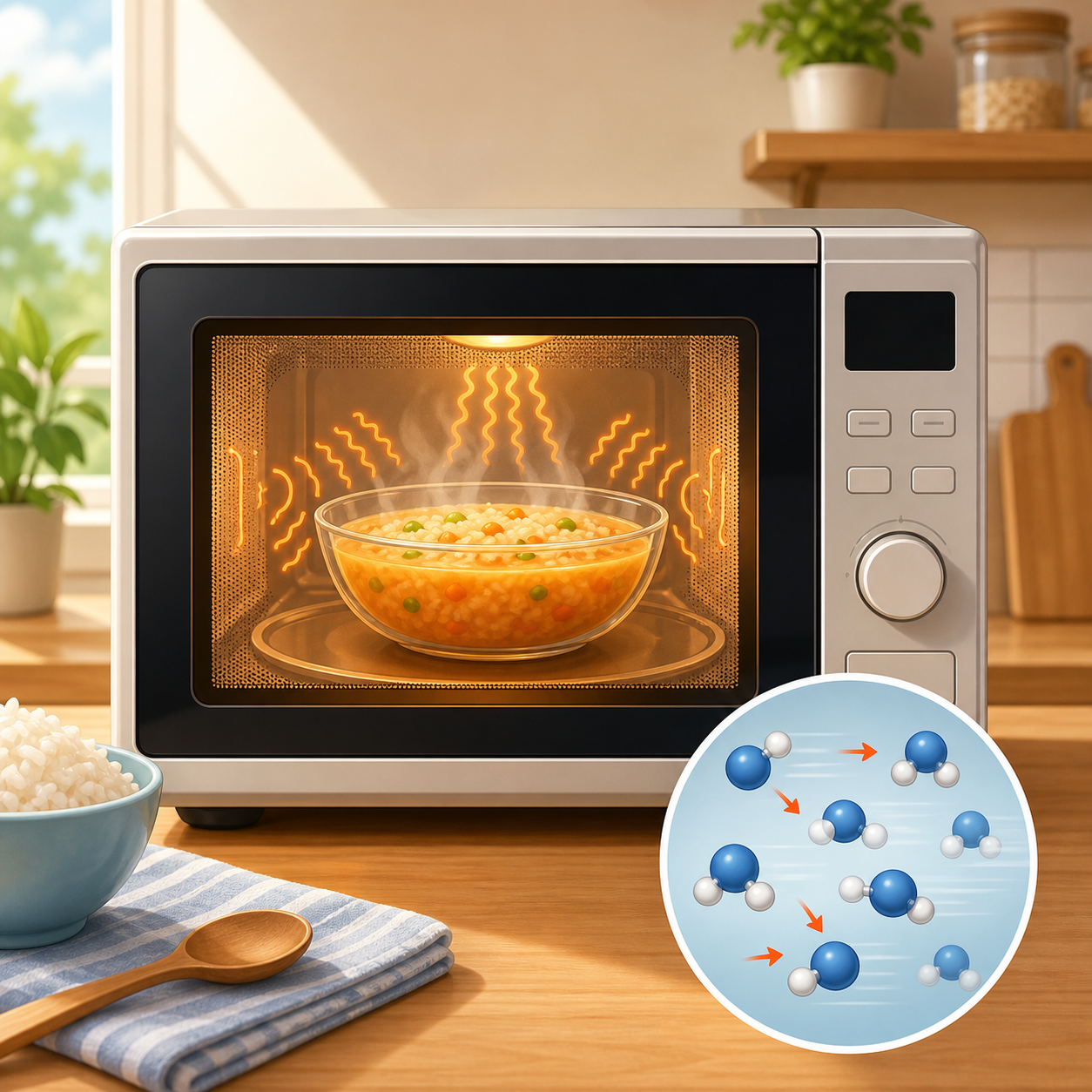
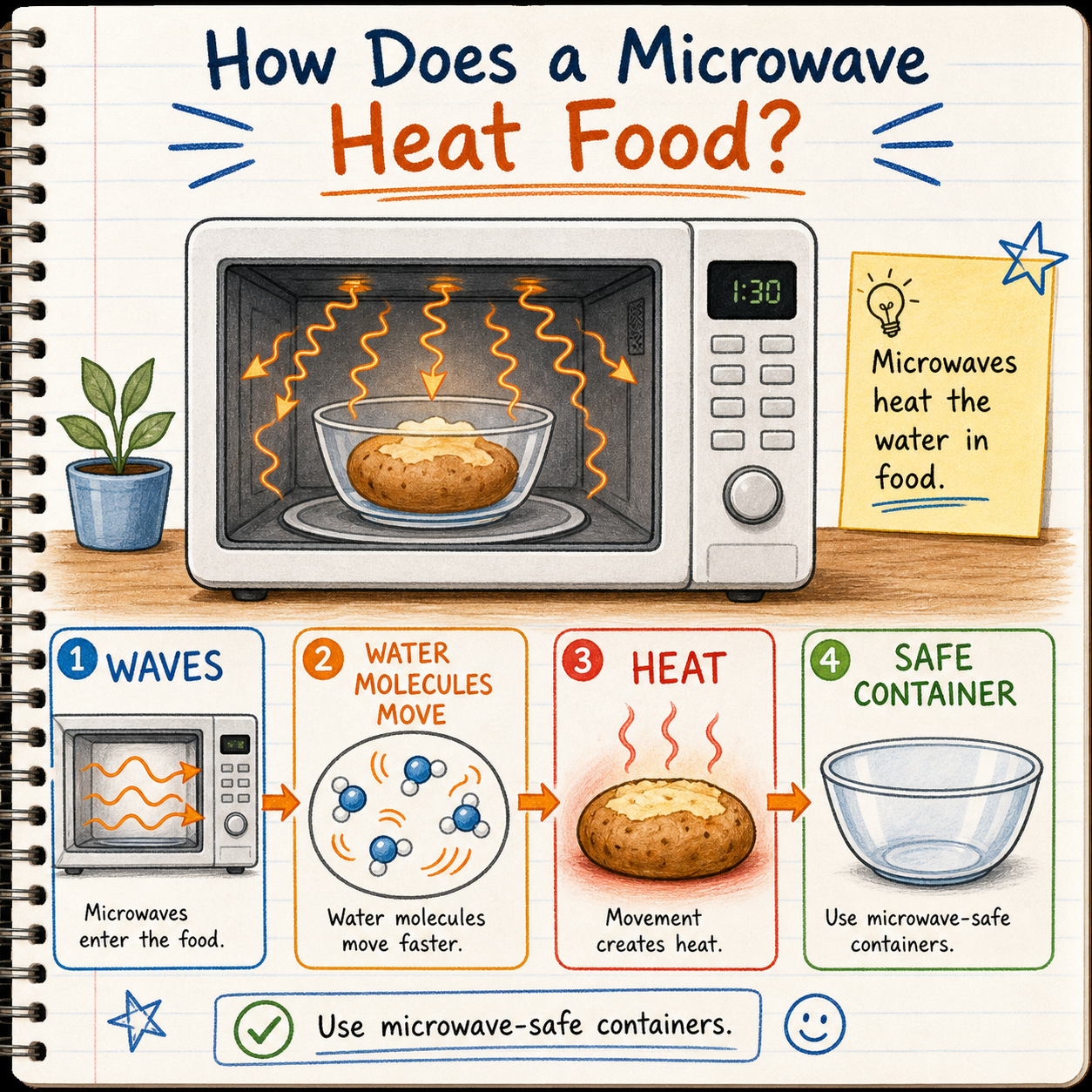
You put cold soup in a microwave oven and close the door. A short time later, the soup is hot. The oven has not used a flame. Instead, it has sent energy into the food through invisible waves.
These waves are called microwaves. A part inside the oven produces them. They bounce off the metal walls and enter the food. Water in the food absorbs some of this energy. Its tiny particles, called molecules, move as the energy reaches them. This process produces heat.
The food does not always become hot everywhere at once. In a thick piece of food, heat also moves from the hotter outer parts toward the middle. Turning or stirring food can help it heat more evenly. Follow the cooking directions for the food you are preparing.
The bowl matters, too. Use a container that is marked safe for a microwave. Some plastic containers are not suitable. Follow the oven maker's directions about metal and other materials.
Even a suitable bowl can become hot because the food passes heat to it. Take care when you lift it out. The waves themselves are invisible; the orange lines in the pictures are only a way to explain them.
Key Vocabulary
These waves are invisible.
Water is made of molecules.
Stir the soup to heat it evenly.
Use a suitable container.
Reading Questions
- Does the oven need a flame to heat the soup?
- What absorbs some of the microwave energy in food?
- Why might you stir the food?
- Can every plastic container go in the oven?
- Why can a suitable bowl still become hot?
Answers
- No. It uses microwaves.
- Water in the food absorbs some of the energy.
- Stirring can help the food heat more evenly.
- No. Some plastic containers are not suitable.
- Heat passes from the food to the bowl.
Short Summary
Microwaves carry energy into food and produce heat. Suitable containers and the maker's directions help us use the oven correctly.
Sources
More Easy Readings
'Everyday Science' 카테고리의 다른 글
| How Do Umbrellas Keep Us Dry? | A2 ESL Science Reading Passage (0) | 2026.09.23 |
|---|---|
| How Does a Remote Control Work? | A2 ESL Science Reading Passage (0) | 2026.07.21 |
| Why Do Apples Float? | A2 ESL Science Reading Passage (0) | 2026.07.17 |
| How Does a Vending Machine Work? | A2 ESL Science Reading Passage (0) | 2026.07.14 |
| Why Do Mirrors Show Reflections? | A2 ESL Science Reading Passage (0) | 2026.07.12 |