A banana can grow brown spots without being cut. Read this short passage to find out why, then try the five questions.
Read the passageTry the questions
Reading Level
A2-B1
Word Count
186 words
Reading Passage
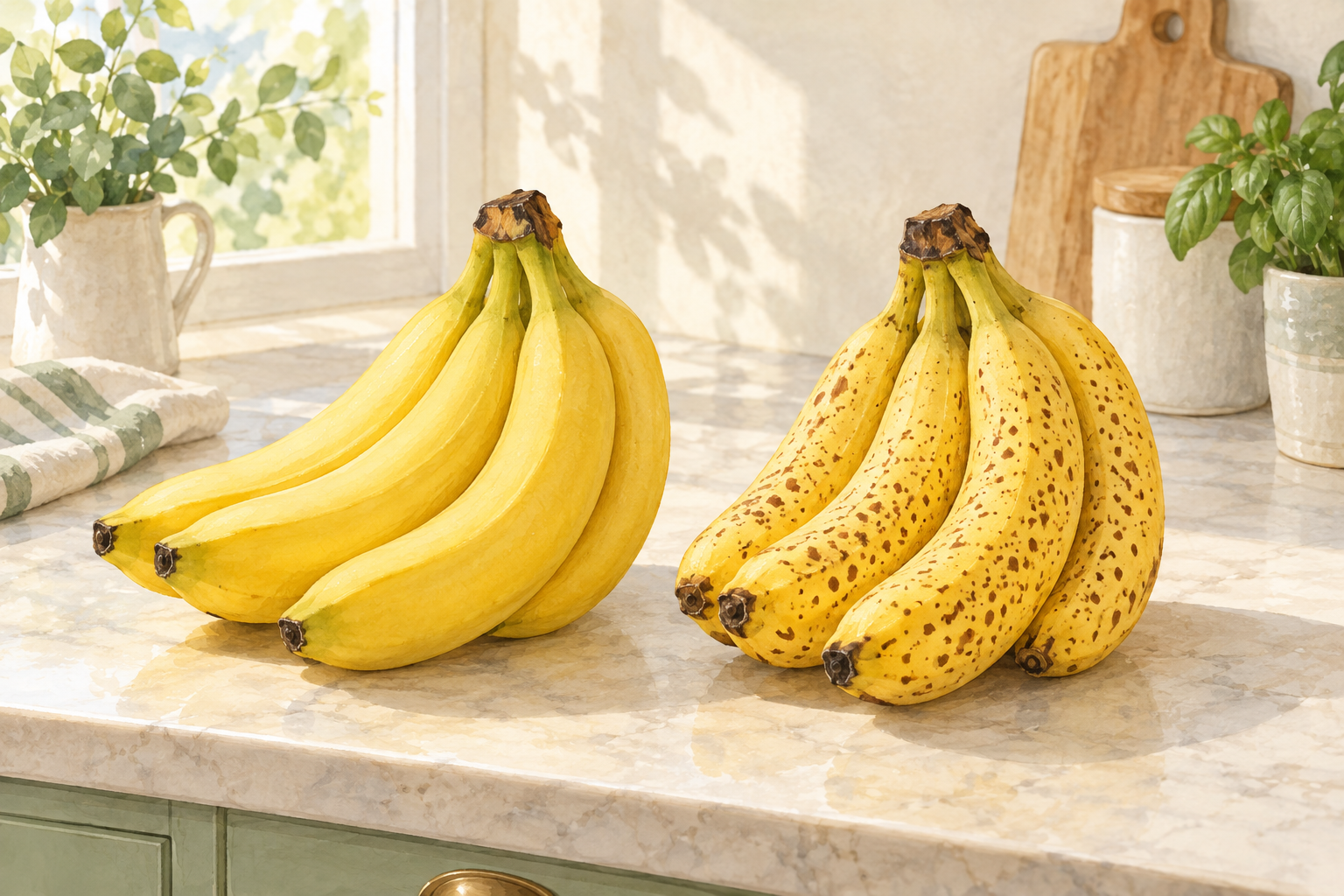
A yellow banana can look quite different after a few days. Its peel may have brown spots, even though nobody has cut it. A sliced banana can turn brown much sooner. What causes these changes?
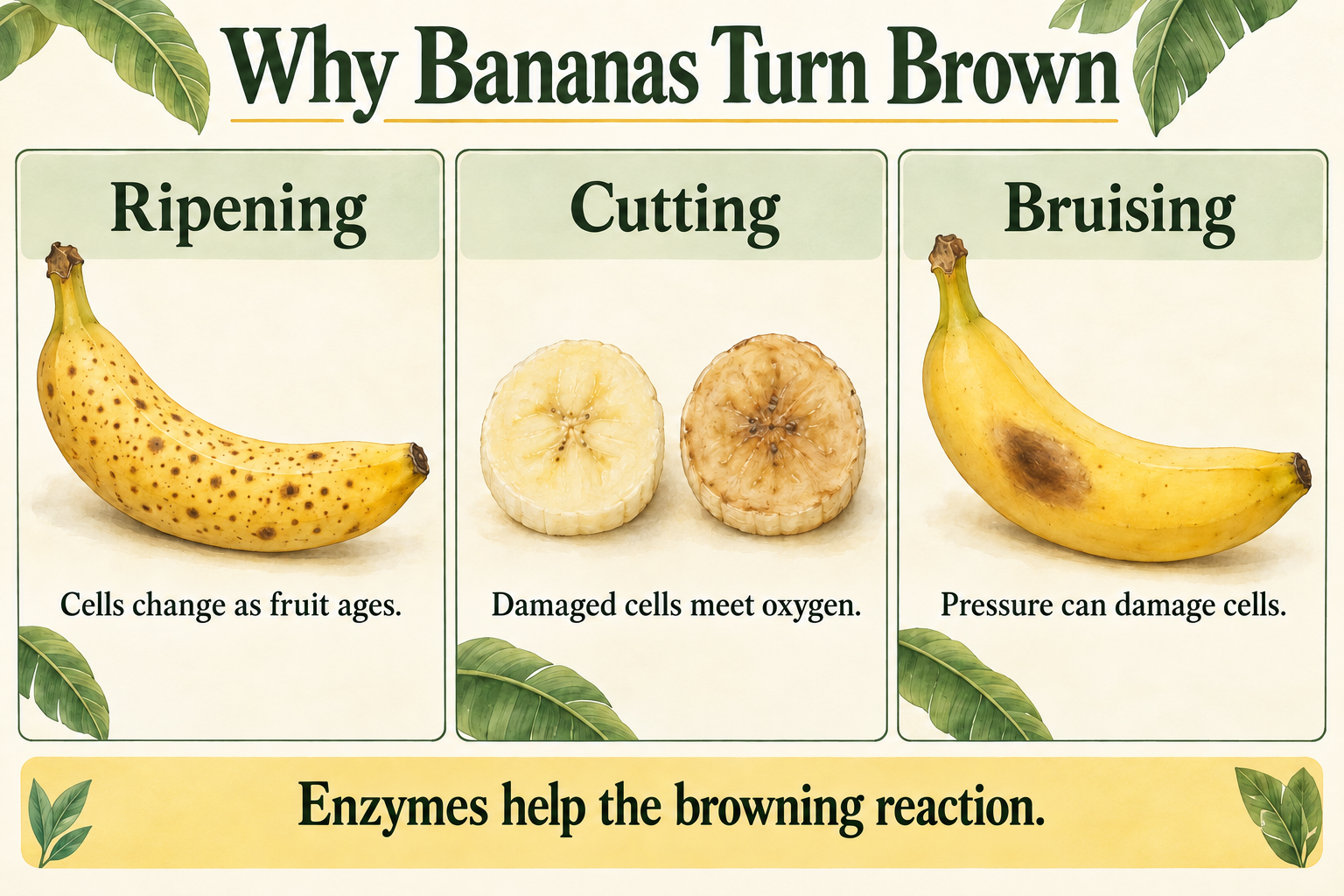
A banana keeps ripening after it is picked. As it becomes ripe, its flesh gets softer and sweeter. The peel changes too. Over time, the cells in the peel change and become damaged. Brown spots can appear as the fruit ages.
Inside a banana, enzymes help certain substances react with oxygen. This reaction produces brown color. Cutting a banana breaks its cells and exposes the flesh to air. That is why fresh slices can become brown on the surface.
Pressing or dropping a banana can damage cells as well. The damaged area may develop a bruise. It can become softer and darker than the rest of the fruit.
These changes do not happen at the same speed. A whole banana may slowly develop spots. A cut or bruised area can change sooner because its cells are already damaged. The brown color is a visible sign of changes happening inside the fruit.
Key Vocabulary
| Word | Meaning |
|---|---|
| ripe | ready to eat |
| peel | the outside skin of a fruit |
| enzymes | natural substances that help chemical changes happen |
| oxygen | a gas in the air |
| bruise | a damaged spot caused by pressure or a hit |
Reading Questions
- Does a banana stop ripening after it is picked?
- What happens to its flesh as it ripens?
- Which gas is involved in the browning reaction?
- Why can banana slices turn brown on the surface?
- What can pressing or dropping a banana do to its cells?
Answers
- No. It keeps ripening.
- It becomes softer and sweeter.
- Oxygen.
- Cutting breaks the cells and exposes the flesh to air.
- It can damage the cells and cause a bruise.
Short Summary
Changes in the banana's cells allow browning reactions to happen. Ripening, cutting, and bruising can all play a part.
More Easy Readings
'Everyday Science' 카테고리의 다른 글
| Why Do Soap Bubbles Pop? | A2 ESL Science Reading Passage (0) | 2026.10.05 |
|---|---|
| Why Does Popcorn Pop? | A2 ESL Science Reading Passage (0) | 2026.10.04 |
| How Does a Washing Machine Work? | A2 ESL Science Reading Passage (0) | 2026.10.02 |
| How Do Umbrellas Keep Us Dry? | A2 ESL Science Reading Passage (0) | 2026.09.23 |
| How Does a Microwave Heat Food? | A2 ESL Science Reading Passage (0) | 2026.09.23 |