


A bowl of dough can grow much larger while it rests. Where does that extra space come from? Read about the tiny bubbles that help make bread soft.
Level: A2–B1 · Word count: 205 · Topic: Food science
Read the passage · Go to the questions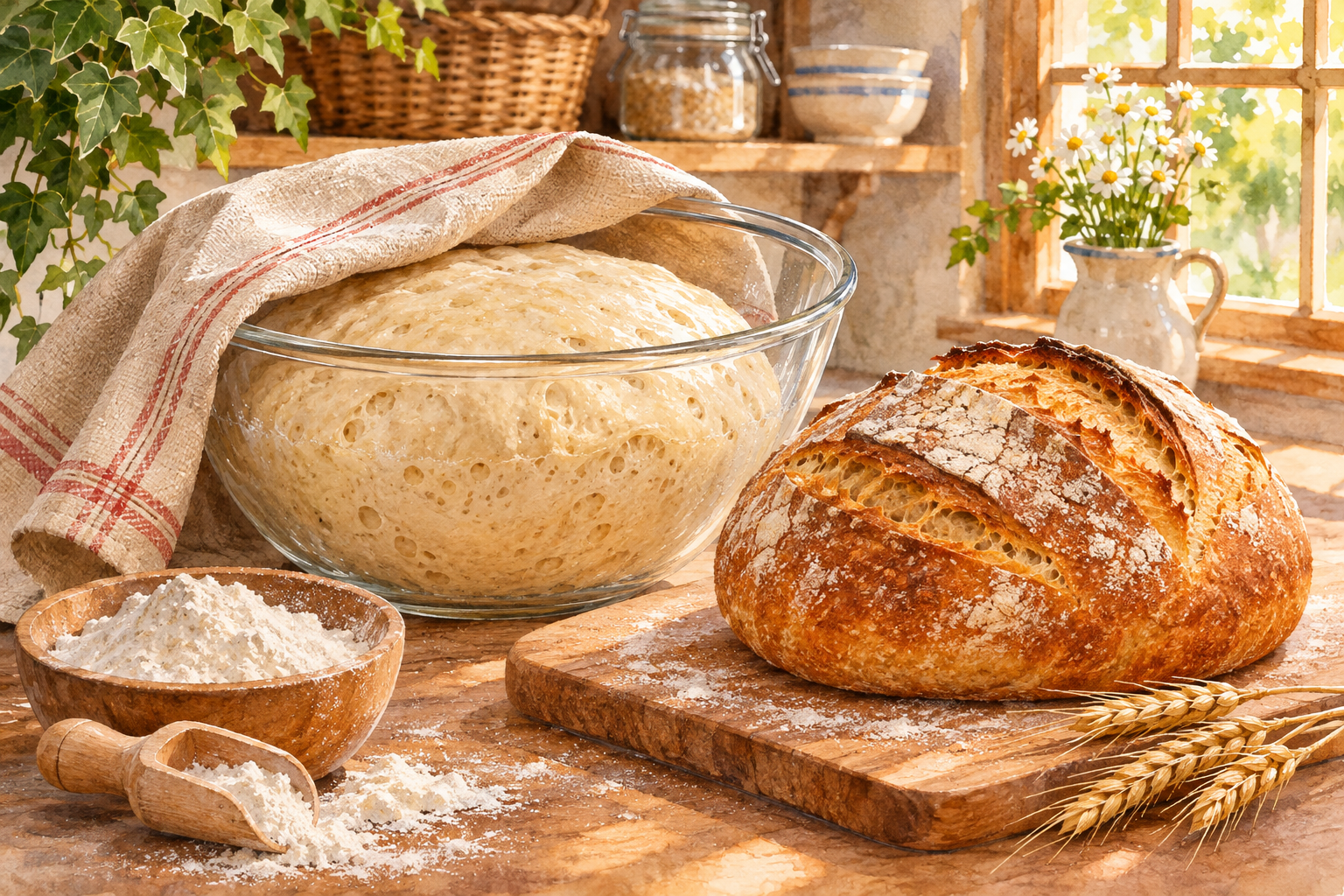
Reading Passage
A baker mixes flour, water, and yeast to make dough. At first, the dough is small and heavy. After some time in a warm place, it becomes larger. Tiny gas bubbles are growing inside it.
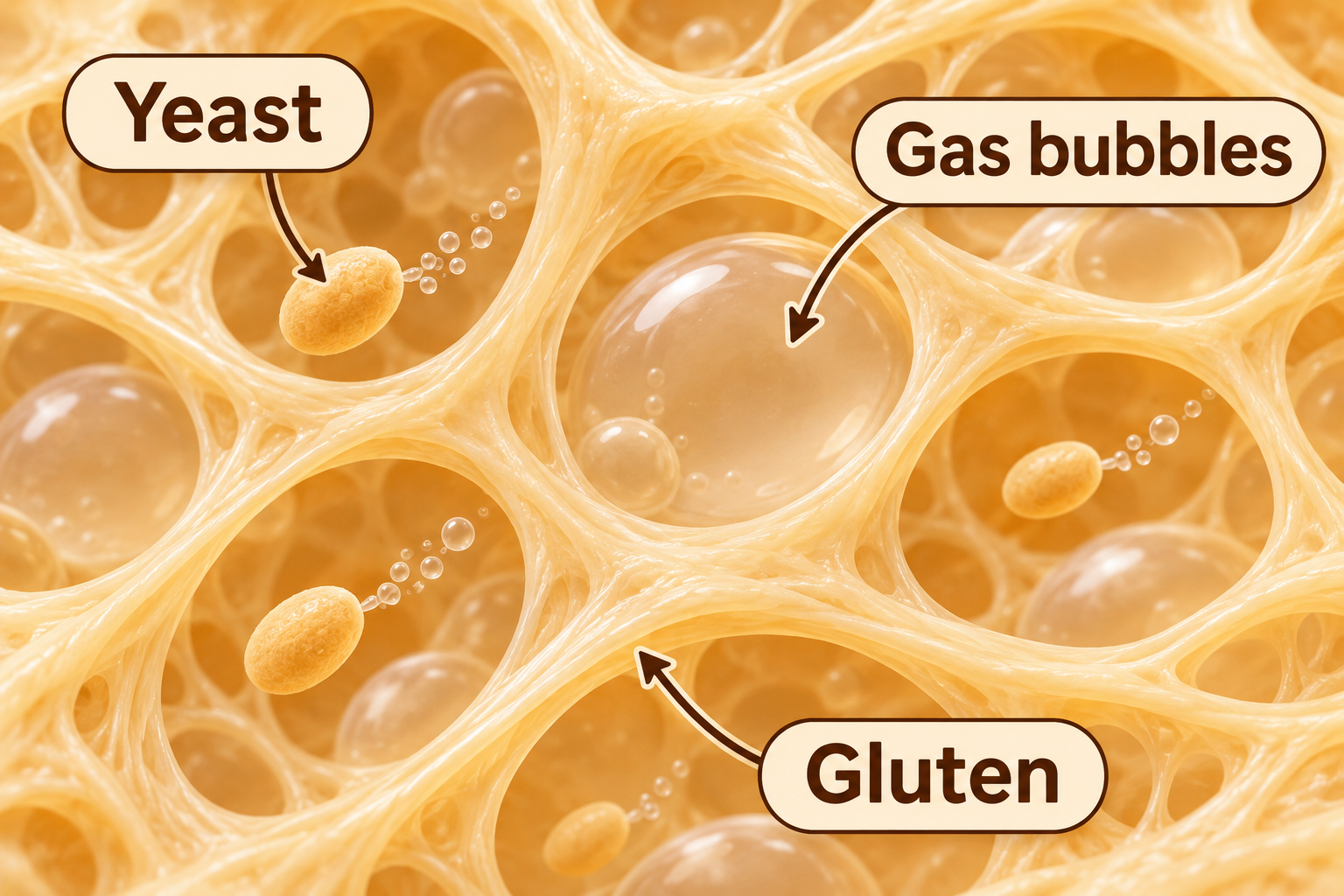
Yeast is a living organism. It uses sugars for food and produces a gas called carbon dioxide. This gas needs somewhere to go. In bread dough, it becomes trapped in small pockets instead of escaping all at once.
Flour and water help make a stretchy structure called gluten. When a baker kneads the dough, this structure develops. Think of it as a soft net. The net holds gas bubbles, and the dough stretches as the bubbles grow. This is why the dough rises.
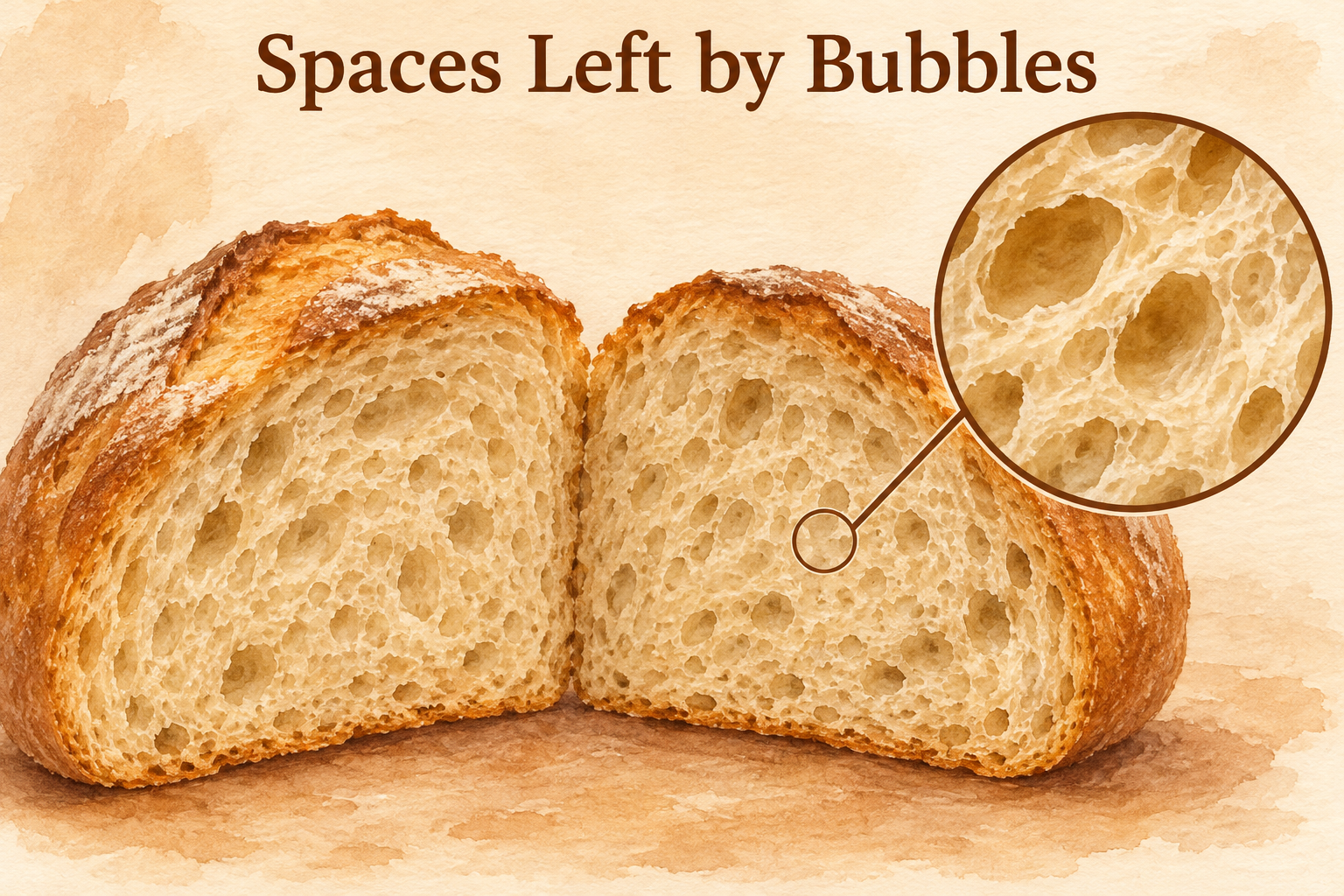
The oven brings another change. Heat makes the gas expand, so the dough can rise a little more. As baking continues, the bread becomes firm enough to keep its shape. When you cut a loaf, the small holes inside show where many of the bubbles were.
Not every kind of bread uses yeast. Some breads use other ways to rise, and flatbreads may stay thin. But in a simple yeast loaf, living yeast and stretchy dough work together. One makes the gas, and the other holds it.
Key Vocabulary
| Word | Meaning |
|---|---|
| dough | a soft mixture used to make bread |
| yeast | a tiny living organism used in baking |
| trapped | held inside and unable to escape easily |
| knead | to press and fold dough with your hands |
| expand | to become larger |
Reading Questions
- What gas does yeast produce?
- What two ingredients help form gluten?
- Why does the passage compare gluten to a net?
- What does the baker do to help the gluten structure develop?
- What do the holes in baked bread show?
- True or false: Every kind of bread uses yeast.
Answers
- Carbon dioxide. Yeast produces this gas as it uses sugars.
- Flour and water. They help form the stretchy gluten structure.
- It holds gas bubbles. A net holds things, just as dough holds bubbles.
- The baker kneads the dough. Pressing and folding helps develop the structure.
- Where gas bubbles were. The baked bread keeps many of these spaces.
- False. Some breads rise in other ways, and some stay thin.
Short Summary
Yeast makes gas, and stretchy dough holds it. Heat expands the bubbles before the bread becomes firm.
More Easy Readings
Sources
The illustrations were created to explain the science in this reading.
'Everyday Science' 카테고리의 다른 글
| How Does a Zipper Work? | Easy Reading with Questions (0) | 2026.10.17 |
|---|---|
| Why Do Bananas Turn Brown? | Easy English Science Reading (0) | 2026.10.05 |
| Why Do Soap Bubbles Pop? | A2 ESL Science Reading Passage (0) | 2026.10.05 |
| Why Does Popcorn Pop? | A2 ESL Science Reading Passage (0) | 2026.10.04 |
| How Does a Washing Machine Work? | A2 ESL Science Reading Passage (0) | 2026.10.02 |