

Use this A2-B1 ESL science reading passage to learn how plants drink water. It includes key vocabulary, reading comprehension questions, and answers for English learners.
Reading Level
A2-B1
Word Count
287 words
Reading Passage
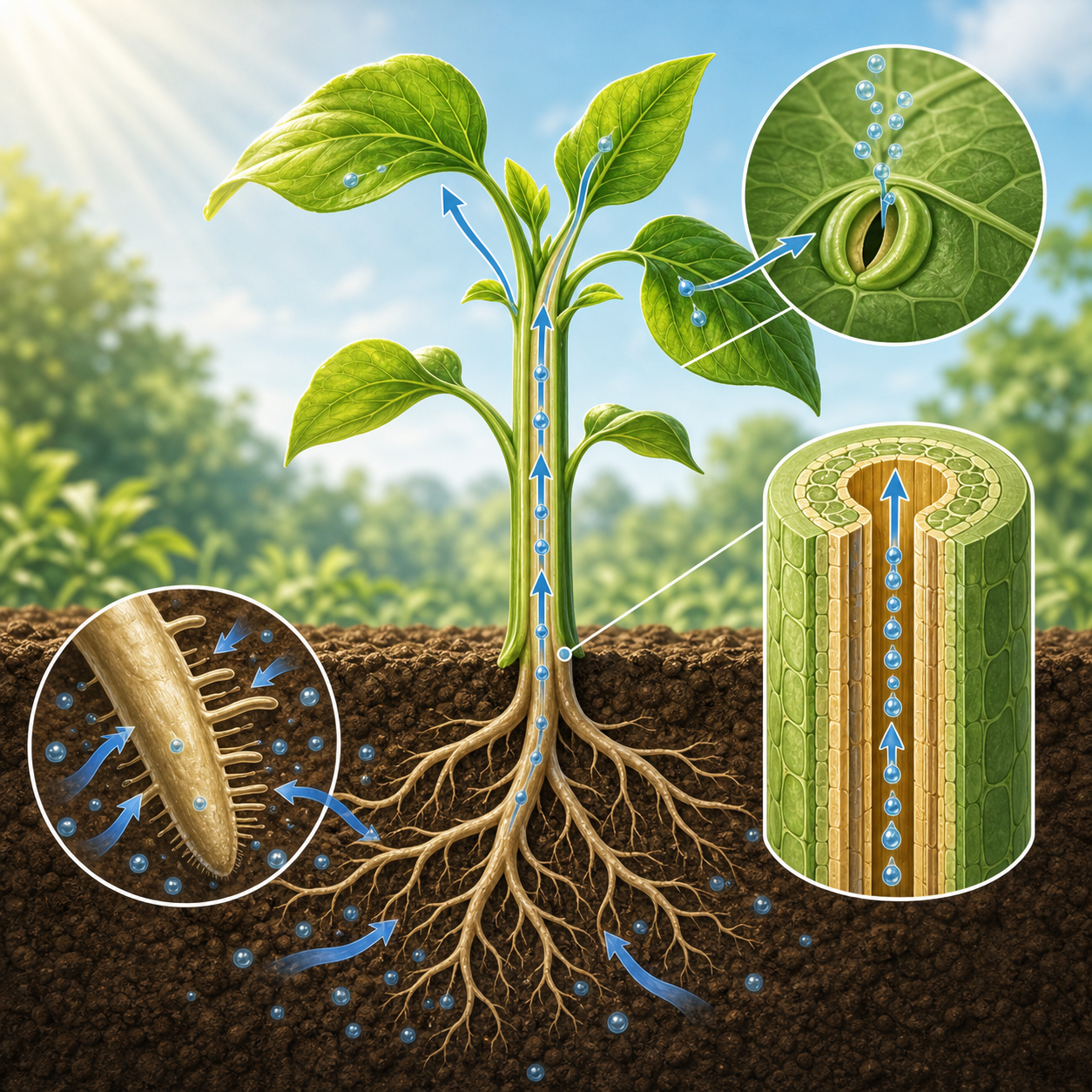
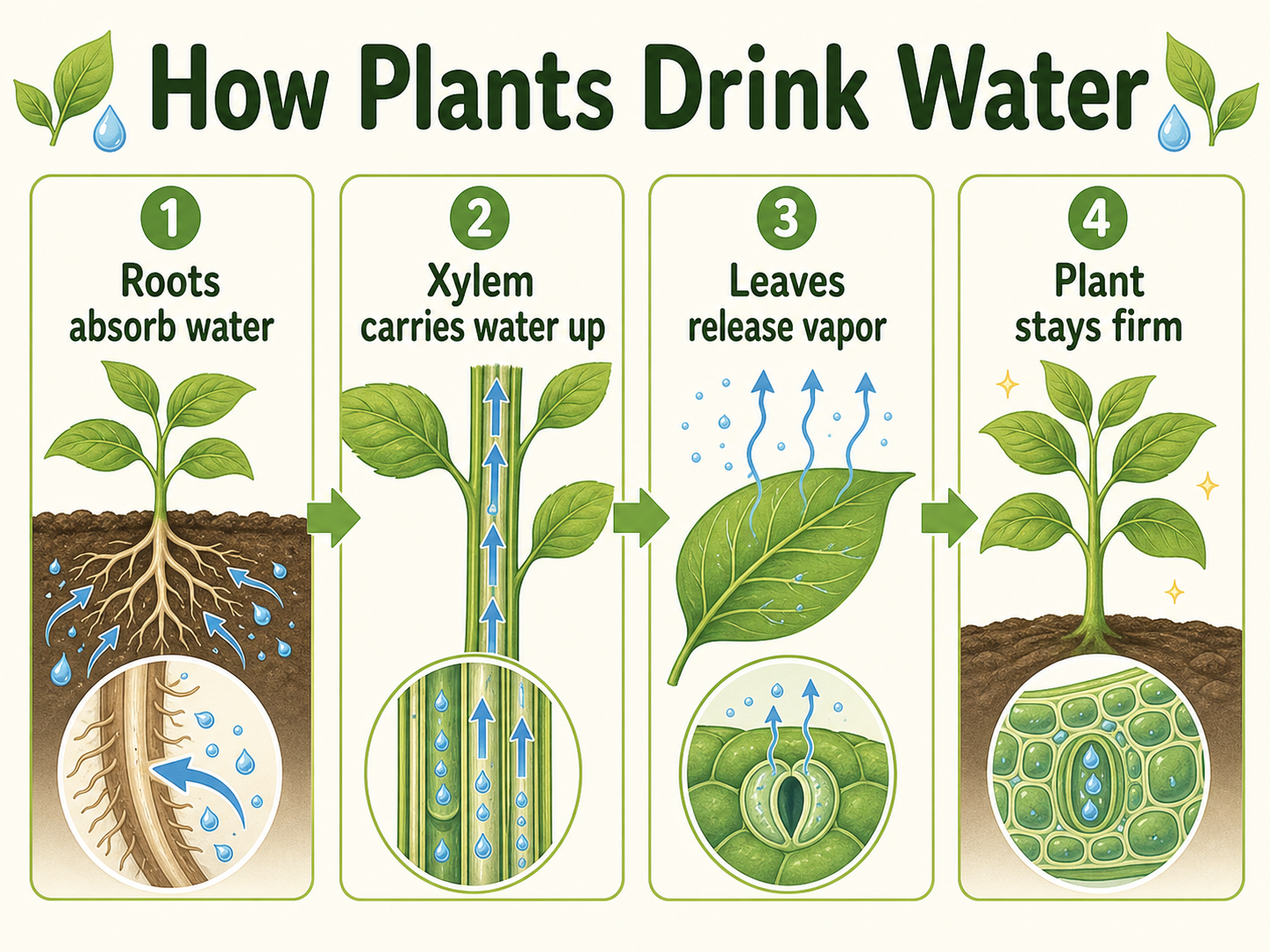
Plants need water to live, but they do not drink like people or animals. Plants take in water from the soil through their roots.
Roots grow underground and spread through the soil. They help hold the plant in place. They also search for water and minerals. Many roots have tiny parts called root hairs. Root hairs give the plant more space to absorb water.
Water moves from the soil into the roots. Then it travels upward through special tubes inside the plant. These tubes are called xylem. Xylem carries water from the roots to the stem, leaves, flowers, and other parts.
Leaves also help pull water upward. Tiny openings on leaves let water vapor leave the plant. This process is called transpiration. When water leaves the leaves, more water is pulled up from the roots.
This movement is a little like drinking through a straw. The plant does not use a mouth, but water still moves upward through the plant.
Plants use water for many jobs. Water helps them stay firm. It helps move minerals. It is also needed for making food from sunlight.
If a plant does not get enough water, it may wilt. Its leaves may become soft and droop down. When the plant gets water again, it may become firm.
Plants drink water quietly every day. Their roots, xylem, and leaves work together to move water from the soil to the whole plant.
Key Vocabulary
| Word | Meaning | Example |
|---|---|---|
| roots | plant parts that usually grow underground | Roots take in water from soil. |
| root hairs | very small hair-like parts of roots that take in water | Root hairs help plants absorb water. |
| xylem | plant tubes that carry water upward from the roots | Water travels through the xylem. |
| transpiration | the movement of water vapor out of plant leaves | Transpiration helps pull water upward. |
| wilt | to become soft and droop down | A plant may wilt without enough water. |
Reading Comprehension Questions
- Where do plants take in water?
- What do root hairs do?
- What is xylem?
- How do leaves help pull water upward?
- What can happen if a plant does not get enough water?
Answers
- Plants take in water from the soil through their roots.
- Root hairs help plants absorb water.
- Xylem is a set of plant tubes that carry water upward from the roots.
- Leaves let water vapor leave the plant, which helps pull more water upward.
- The plant may wilt, and its leaves may droop.
Short Summary
Plants drink water through their roots. Water moves upward through xylem, and leaves help pull water through the plant by transpiration.
More Easy Readings
'Everyday Science' 카테고리의 다른 글
| Why Does Metal Rust? | A2 ESL Science Reading Passage (1) | 2026.06.13 |
|---|---|
| How Does Soap Clean? | A2 ESL Science Reading Passage (0) | 2026.06.12 |
| How Does a Compass Work? | A2 ESL Science Reading Passage (0) | 2026.06.10 |
| How Do Airplanes Fly? | A2 ESL Science Reading Passage (0) | 2026.05.28 |
| How Do Magnets Work? | A2 ESL Science Reading Passage (0) | 2025.03.11 |