Use this A2-B1 ESL science reading passage to learn why ice floats on water. It includes key vocabulary, reading comprehension questions, and answers for English learners.
Reading Level
A2-B1
Word Count
185 words
Reading Passage
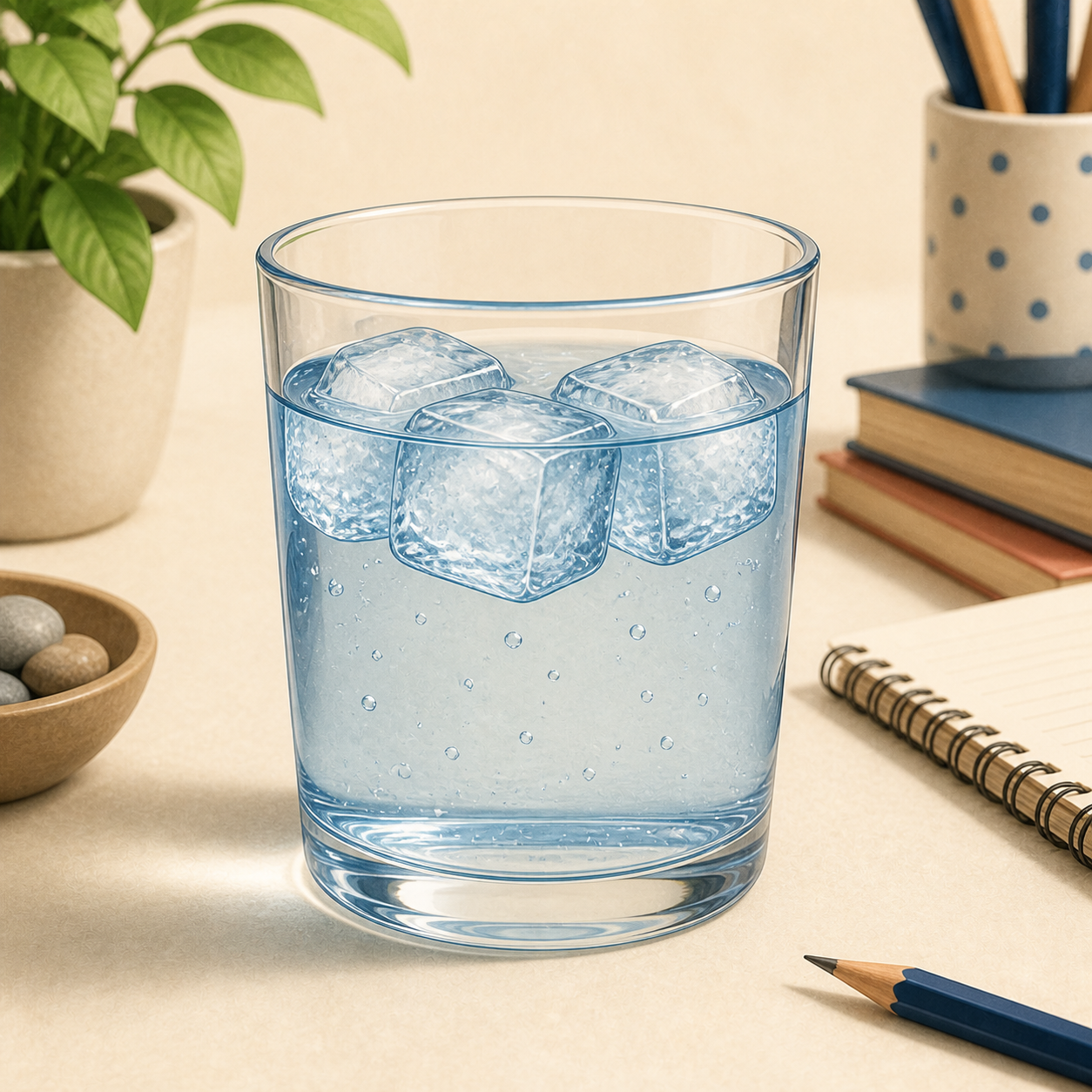
Ice cubes float in a glass of water. This may seem normal, but it is actually unusual. Many solid forms of materials are heavier than their liquid forms. Water is different.
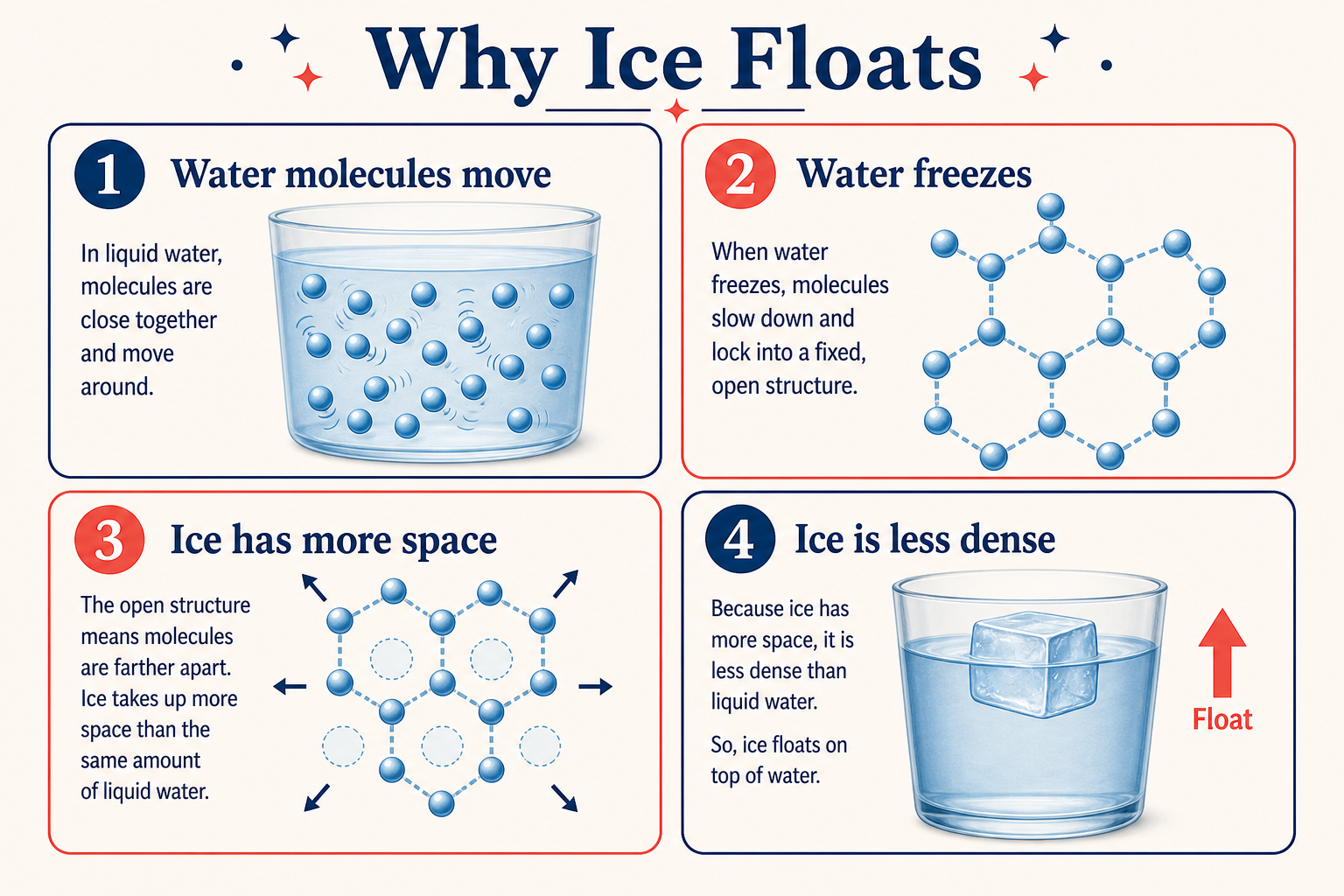
Ice floats because it has lower density than liquid water. Density tells us how tightly matter is packed together. If an object is less dense than water, it can float. If it is more dense, it usually sinks.
When water gets very cold, it begins to freeze. The water molecules move more slowly. They also form a special pattern. This pattern leaves more open space between the molecules.
Because of this open space, water expands when it freezes. The same amount of water takes up more space as ice. This makes ice less dense than liquid water, so ice floats.
Floating ice is important in nature. In winter, ice can form on top of lakes and ponds. The water below the ice can stay liquid. Fish and other living things can survive under the ice.
Ice in a drink may look simple, but it shows an important science idea. Water has special properties that help life on Earth.
Key Vocabulary
| Word | Meaning | Example |
|---|---|---|
| ice | frozen water | Ice can float in a glass of water. |
| float | to stay on top of a liquid | The ice cubes float in the drink. |
| density | how much matter is packed into a space | Ice has lower density than liquid water. |
| freeze | to change from a liquid into a solid | Water can freeze in cold weather. |
| expand | to get bigger or take up more space | Water expands when it freezes. |
Reading Comprehension Questions
- Why does ice float on water?
- What does density tell us?
- What happens when water freezes?
- Why does ice have lower density than liquid water?
- Why is floating ice important in lakes and ponds?
Answers
- Ice floats because it has lower density than liquid water.
- Density tells us how tightly matter is packed together.
- Water changes from a liquid into a solid.
- Ice has more open space between its molecules.
- It lets water below the ice stay liquid, so living things can survive.
Short Summary
Ice floats because water expands when it freezes, making ice less dense than liquid water.
More Easy Readings
'Everyday Science' 카테고리의 다른 글
| How Does a Thermometer Work? | A2 ESL Science Reading Passage (0) | 2026.06.17 |
|---|---|
| How Does Recycling Work? | A2 ESL Science Reading Passage (0) | 2026.06.17 |
| Why Does Metal Rust? | A2 ESL Science Reading Passage (1) | 2026.06.13 |
| How Does Soap Clean? | A2 ESL Science Reading Passage (0) | 2026.06.12 |
| How Does a Compass Work? | A2 ESL Science Reading Passage (0) | 2026.06.10 |