Use this A2-B1 ESL science reading passage to learn how a light bulb works. It includes key vocabulary, reading comprehension questions, and answers for English learners.
Reading Level
A2-B1
Word Count
202 words
Reading Passage
A light bulb is a small object that helps us see in the dark. We use light bulbs in homes, schools, shops, and streets. When we turn on a switch, the bulb can make light.
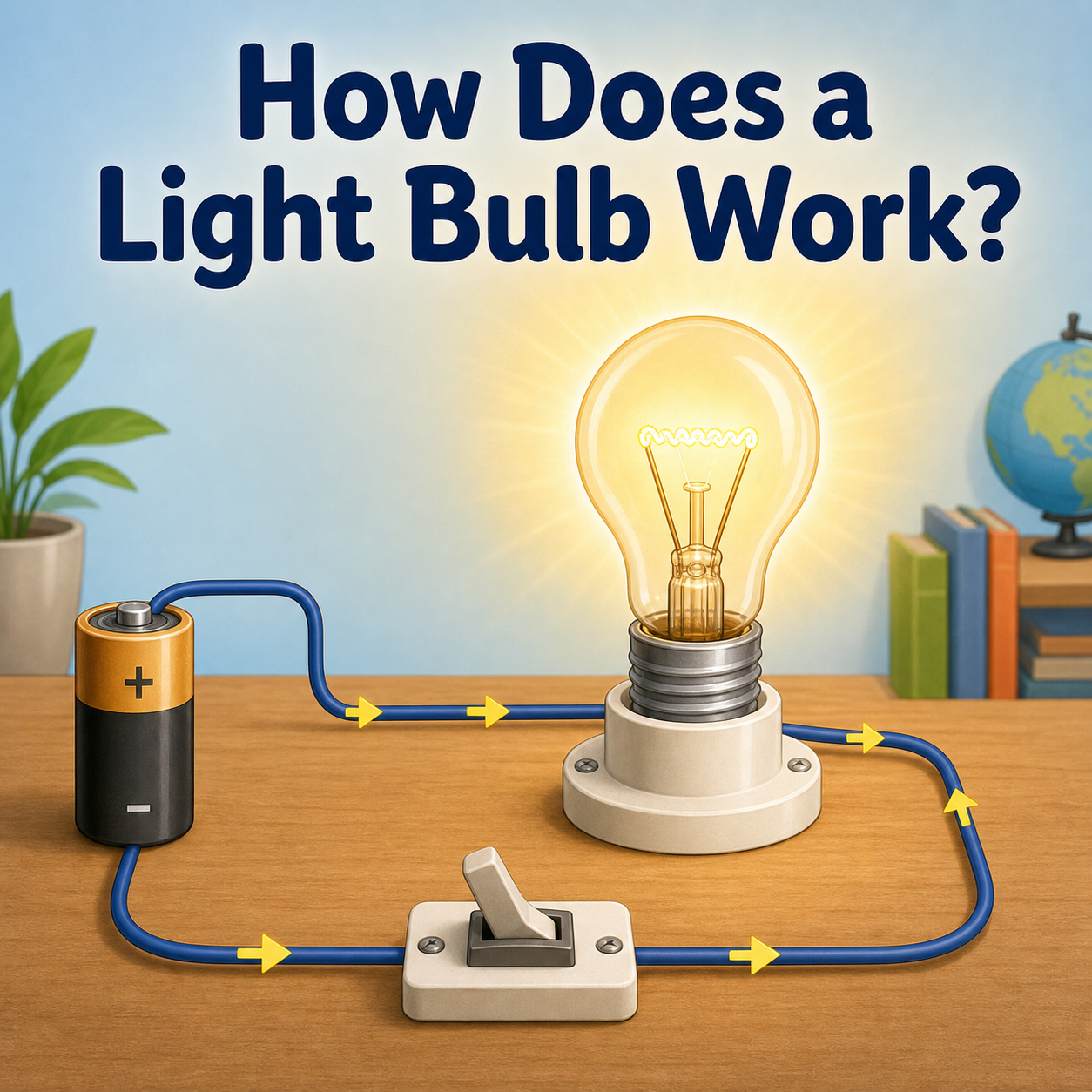
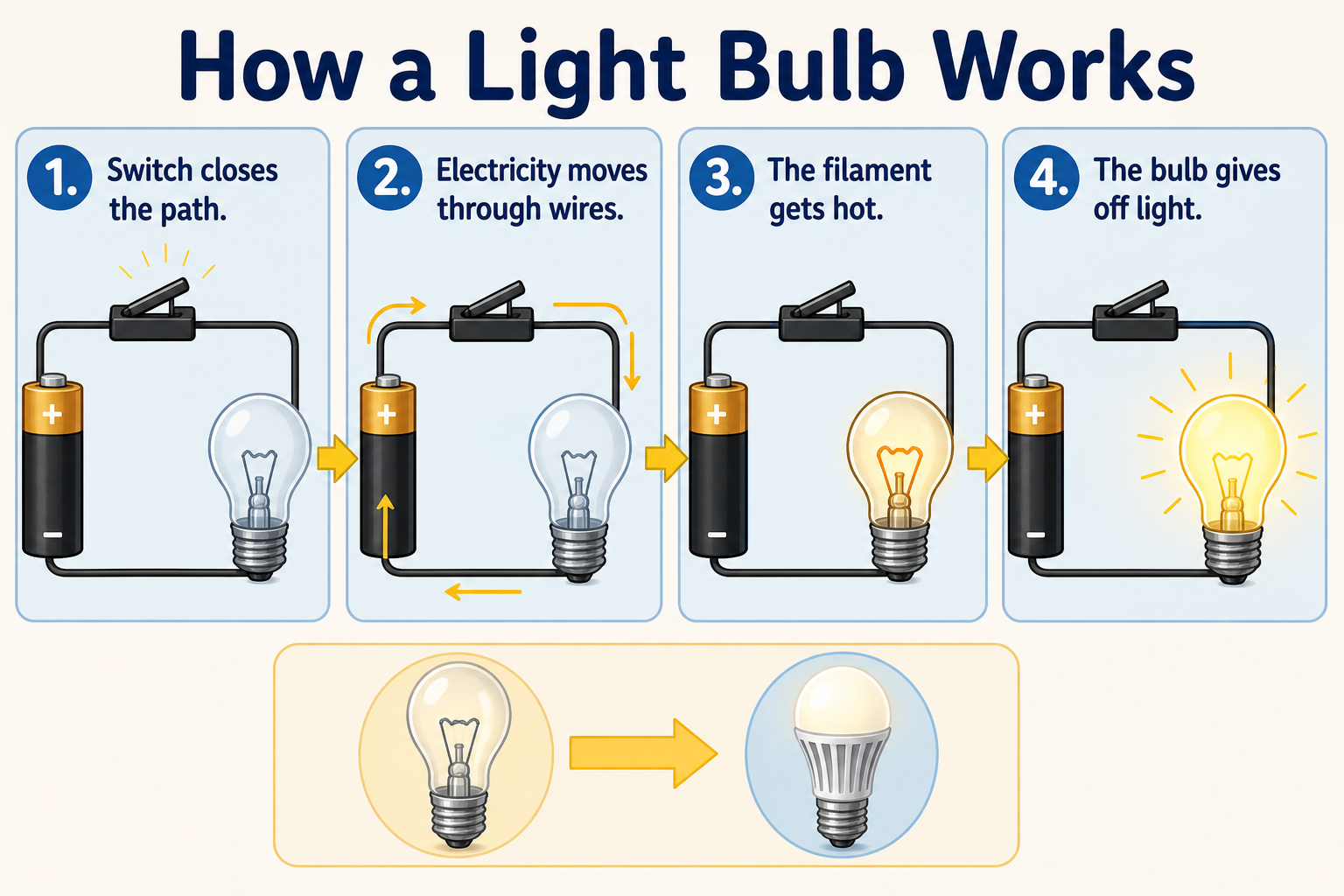
A light bulb needs electricity. Electricity moves through a wire inside the bulb. In an older light bulb, the electricity passes through a very thin wire called a filament.
The filament does not let electricity move easily. Because of this, it becomes very hot. When the filament becomes hot enough, it glows and gives off light. This kind of bulb also gives off heat, so it can feel warm after it is on for a while.
Many modern bulbs are LED bulbs. LED bulbs do not need a hot filament. They use electricity in a different way to make light. They usually use less energy than older bulbs.
The switch is important too. It opens or closes the path for electricity. When the path is closed, electricity can flow and the bulb turns on. When the path is open, electricity stops and the bulb turns off.
A light bulb changes electrical energy into light. This simple tool helps people read, work, cook, and move safely at night.
Key Vocabulary
| Word | Meaning | Example |
|---|---|---|
| electricity | energy that can move through wires and power machines | The lamp needs electricity to work. |
| wire | a thin piece of metal that carries electricity | Electricity moves through the wire. |
| filament | a thin wire inside an old light bulb that gives off light when hot | The filament glows inside the bulb. |
| energy | the power needed to do work or make things happen | A light bulb uses energy to make light. |
| LED | a small light source that uses electricity efficiently | An LED bulb can use less energy. |
Reading Comprehension Questions
- Where do people use light bulbs?
- What moves through the wire inside a light bulb?
- What is a filament?
- Why can an older light bulb become warm?
- Why are LED bulbs useful?
Answers
- People use light bulbs in homes, schools, shops, and streets.
- Electricity moves through the wire.
- A filament is a thin wire that gives off light when it becomes hot.
- It becomes warm because the filament gives off heat.
- LED bulbs are useful because they usually use less energy than older bulbs.
Short Summary
A light bulb uses electricity to make light. Older bulbs use a hot filament, while many LED bulbs make light with less wasted energy.
More Easy Readings
'Everyday Science' 카테고리의 다른 글
| Why Do Batteries Run Out? | A2 ESL Science Reading Passage (0) | 2026.06.19 |
|---|---|
| Why Do Bridges Not Fall Down? | A2 ESL Science Reading Passage (0) | 2026.06.19 |
| How Does a Thermometer Work? | A2 ESL Science Reading Passage (0) | 2026.06.17 |
| How Does Recycling Work? | A2 ESL Science Reading Passage (0) | 2026.06.17 |
| Why Does Ice Float on Water? | A2 ESL Science Reading Passage (0) | 2026.06.15 |