


A bat can catch a tiny insect after sunset. Explore how it uses sound in this short English reading passage, with vocabulary, questions, and a printable worksheet.
Reading Level: A2-B1 · Word Count: 193 words in the reading passage.
Tap a marked word to find its meaning in the vocabulary table.
Reading Passage
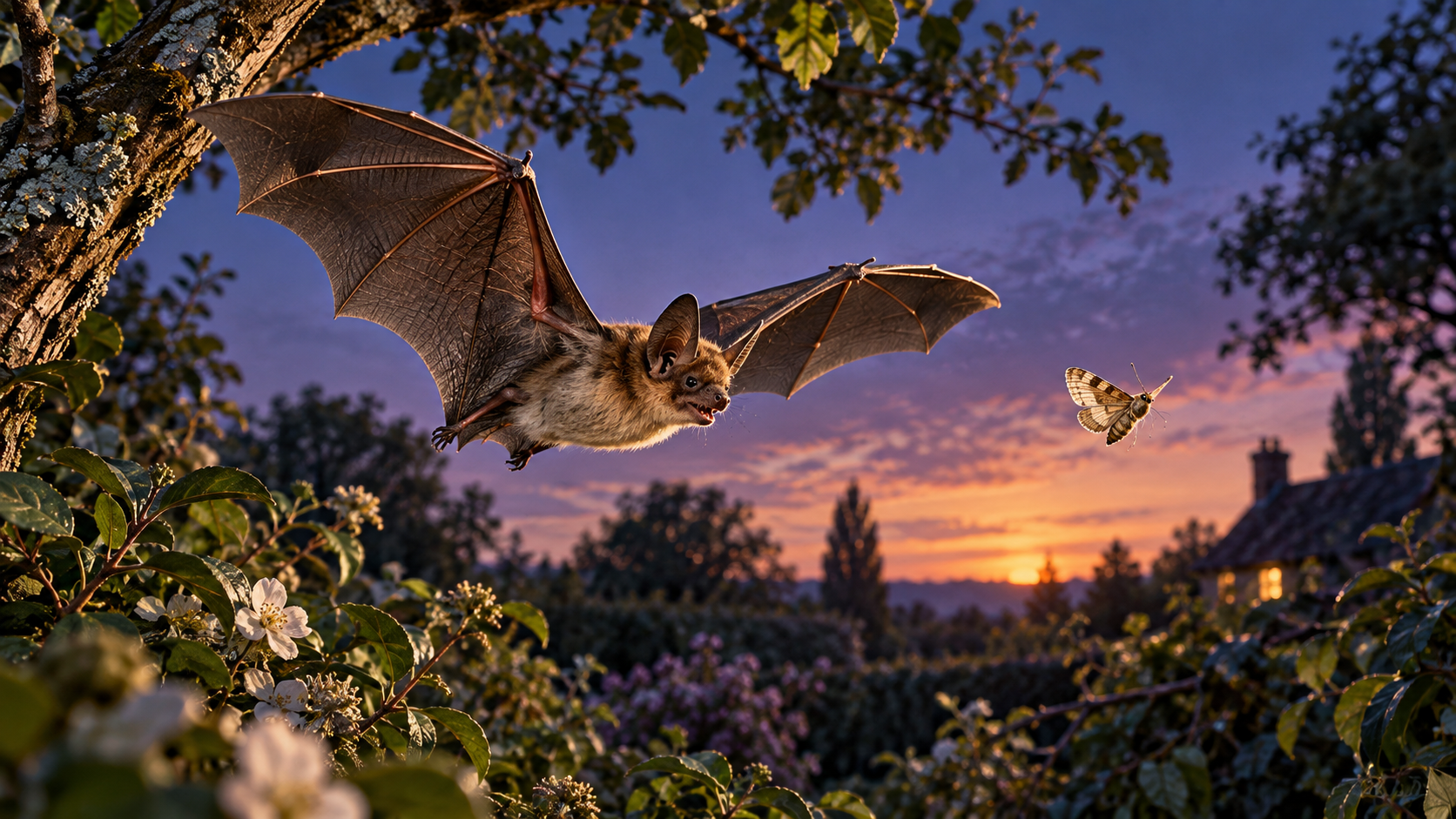
A small bat flies above a garden at night. A moth moves between the trees. The bat changes direction and catches it. How does the bat find such a small meal in the dark?
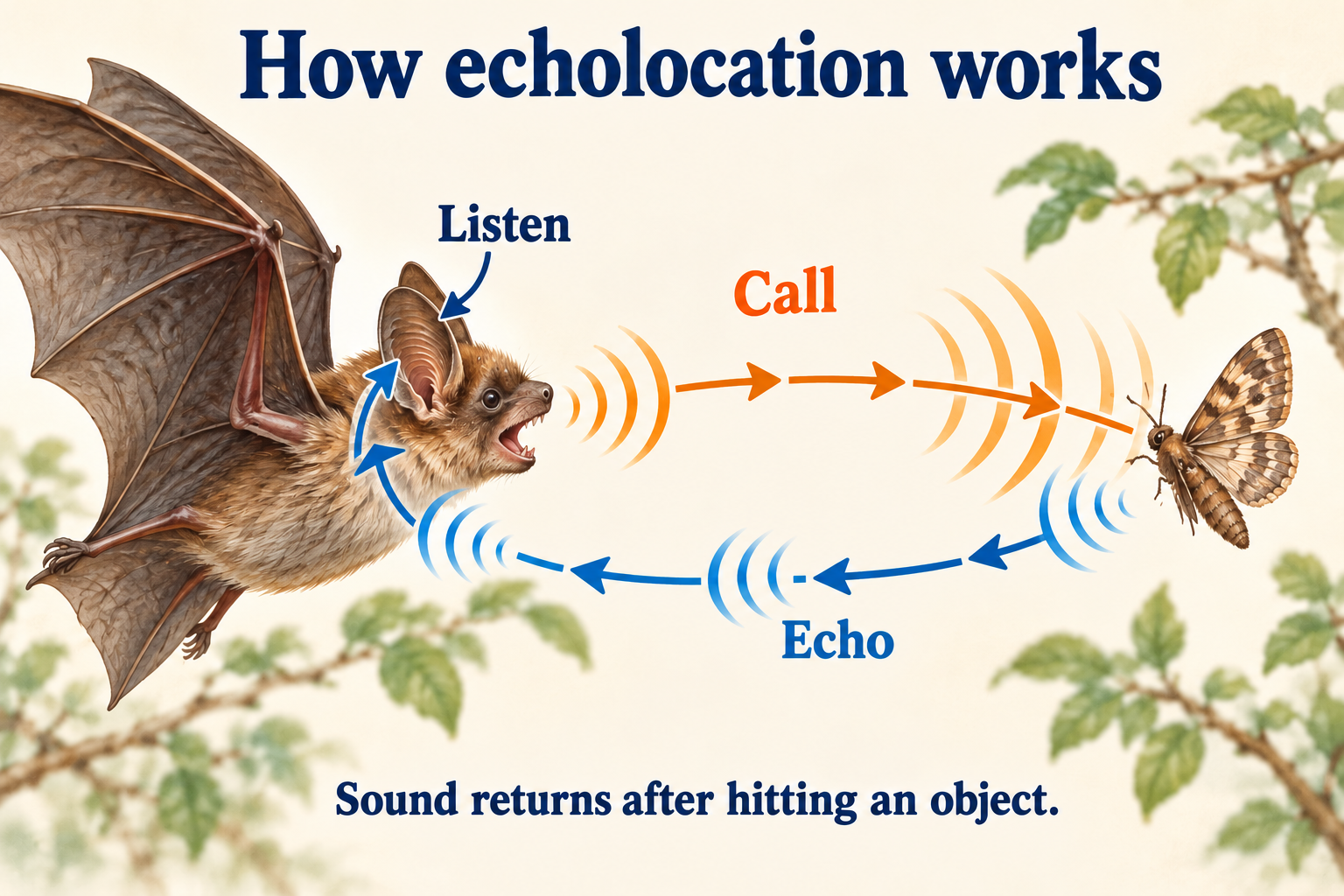
Many bats use sound to find food. This system is called echolocation. First, a bat sends out a call. The sound travels through the air. When it reaches an insect, some of the sound bounces off it. The returning sound is an echo.
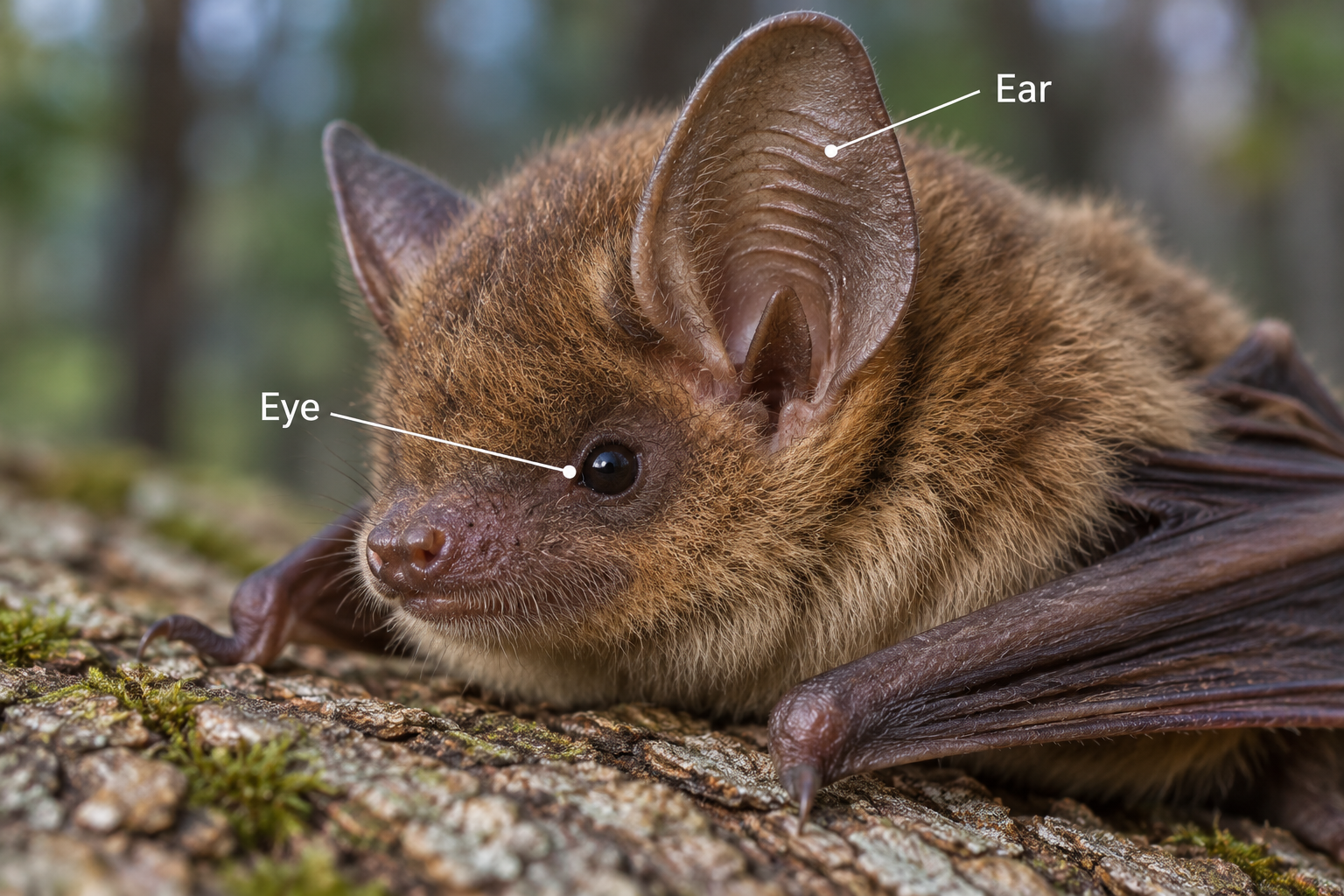
The bat listens with its ears. The echoes give it information about the insect's size and location. They also help it avoid branches and other objects. As the bat gets closer to an insect, it can make calls more quickly. This helps it follow a moving meal.
Most of these calls are too high for people to hear. Scientists use special microphones to record them. They can then change the recordings so people can hear the sounds.
Does this mean bats are blind? No. Bats have eyes and can see. Sound gives many bats another way to explore their surroundings. Not every kind of bat uses echolocation, however. Different bats have different ways of finding food.
Key Vocabulary
| Word | Meaning |
|---|---|
| echolocation | finding objects by making sounds and listening for their return |
| bounces | moves back after hitting something |
| echo | a sound that returns after hitting an object |
| blind | unable to see |
Reading Questions
- What does the bat catch in the garden?
- What happens when the bat's sound reaches an insect?
- Name two things that echoes tell the bat about the insect.
- How can the bat change its calls as it gets closer to food?
- Why do scientists use special microphones to record most of these calls?
- True or false: Bats use echolocation because they have no eyes.
- Do all kinds of bats use echolocation?
Answers
- A moth.
- Some of the sound bounces off the insect and returns as an echo.
- Its size and location.
- It can make calls more quickly.
- Most of these calls are too high for people to hear.
- False. Bats have eyes and can see.
- No. Different kinds of bats find food in different ways.
Short Summary
Many bats send out calls and listen for echoes to find insects and avoid objects. They can also see, and not all bats use echolocation.
More Easy Readings
Printable Worksheet
Download the three-page PDF: reading and vocabulary, student questions, and a separate answer key.
Science Sources
The images are educational illustrations.
'Animal Science Reading' 카테고리의 다른 글
| Why Do Mosquitoes Bite? | A2 ESL Science Reading Passage (0) | 2026.07.03 |
|---|---|
| How Do Camels Live in the Desert? | A2 ESL Science Reading Passage (0) | 2026.07.02 |
| Why Do Giraffes Have Long Necks? | A2 ESL Science Reading Passage (0) | 2026.07.02 |
| Why Do Dolphins Jump? | A2 ESL Science Reading Passage (0) | 2026.06.25 |
| How Do Butterflies Grow? | A2 ESL Science Reading Passage (0) | 2026.06.10 |