


A white cloud appears when you breathe out on a cold morning. Learn what you are seeing in this short English reading, with vocabulary, questions, and a printable worksheet.
Reading Level: A2-B1 · Word Count: 184 words in the reading passage.
Tap a marked word to find its meaning in the vocabulary table.
Reading Passage
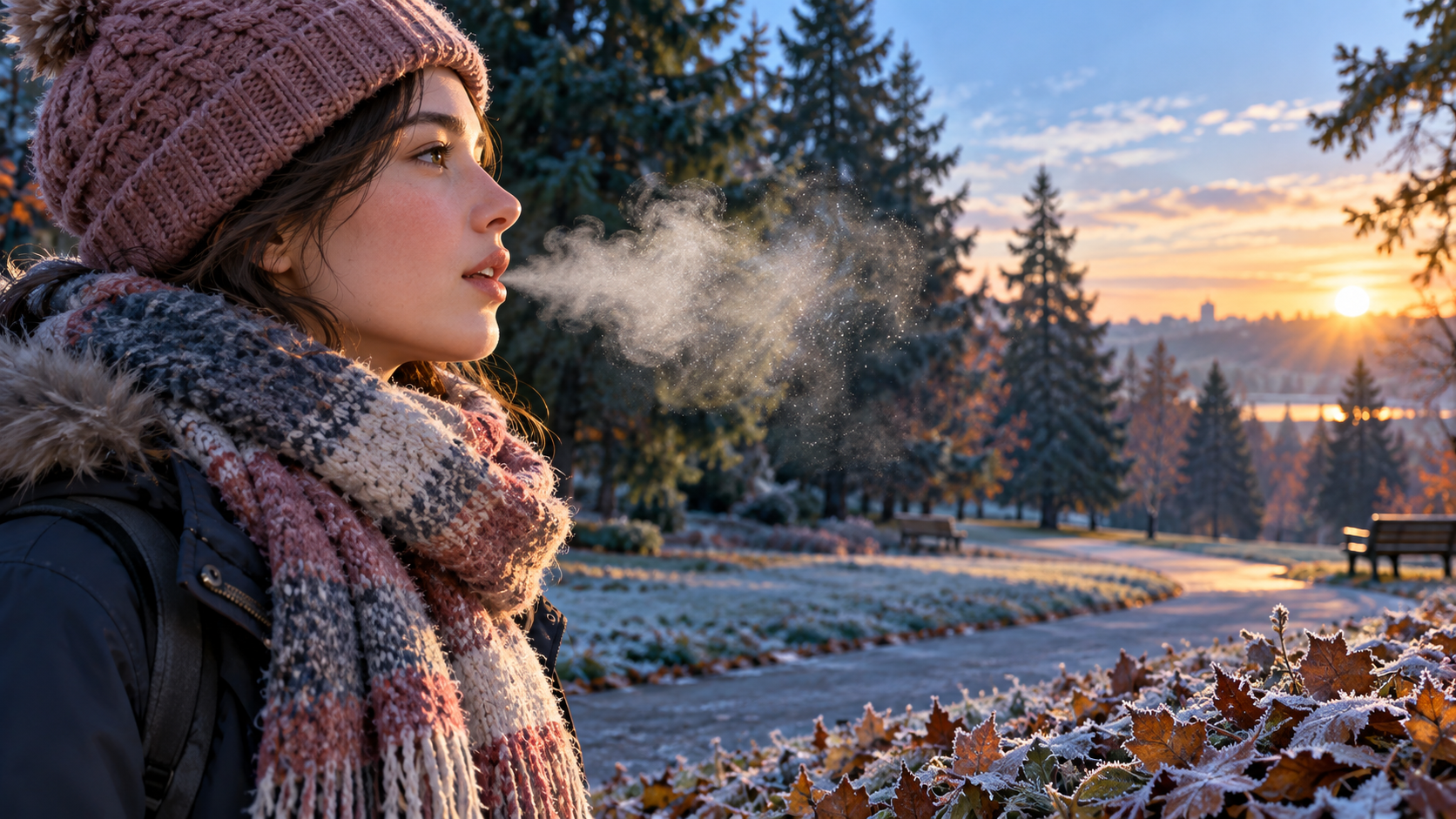
On a cold morning, you breathe out and see a small white cloud. A moment later, it disappears. What is the cloud, and why does it appear only sometimes?
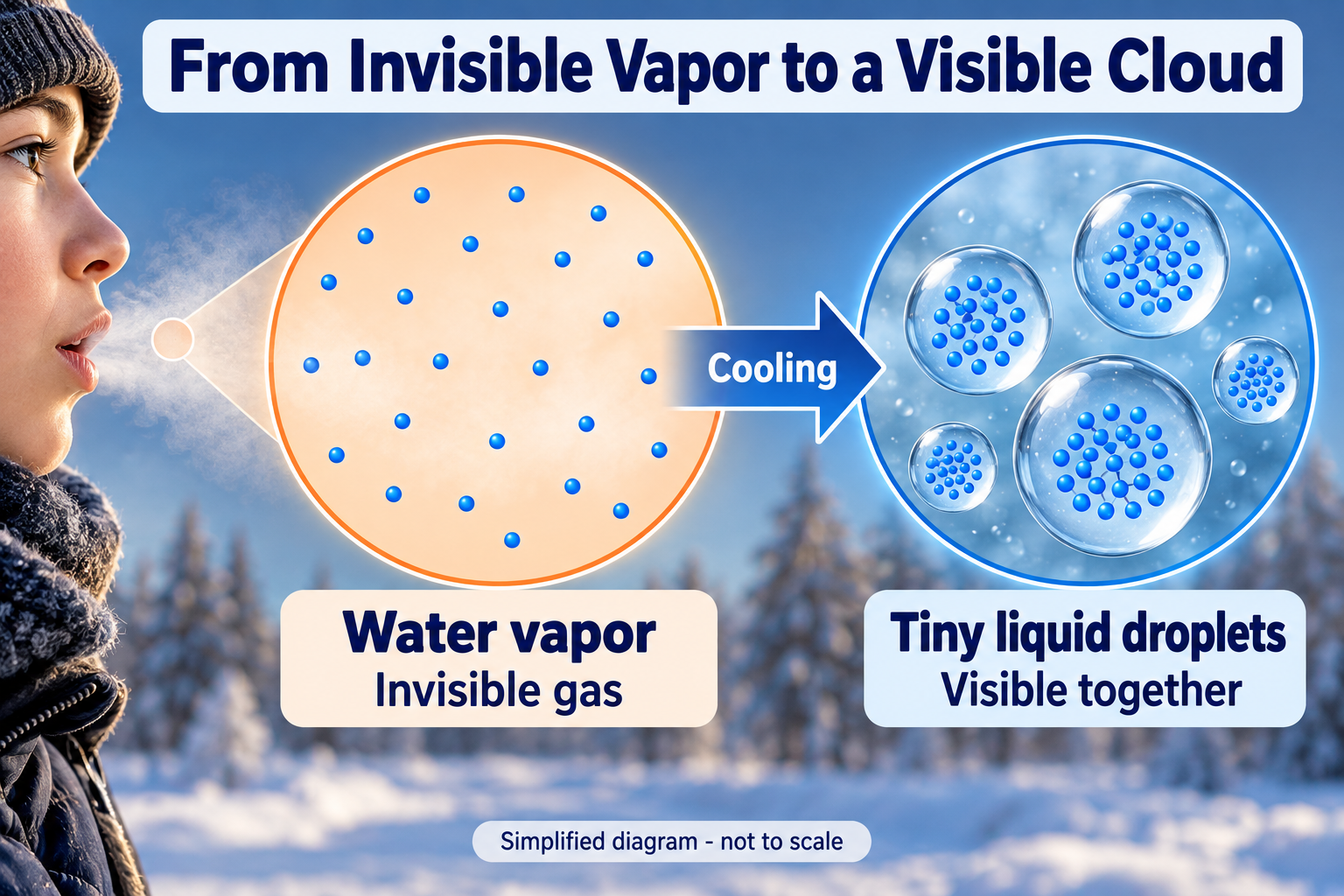
The air you breathe out is warm and contains water vapor. This gas is invisible. When your breath mixes with cold outside air, it cools quickly. Some of the water vapor condenses. It forms tiny droplets that float in the air. Together, these droplets look like a little cloud.
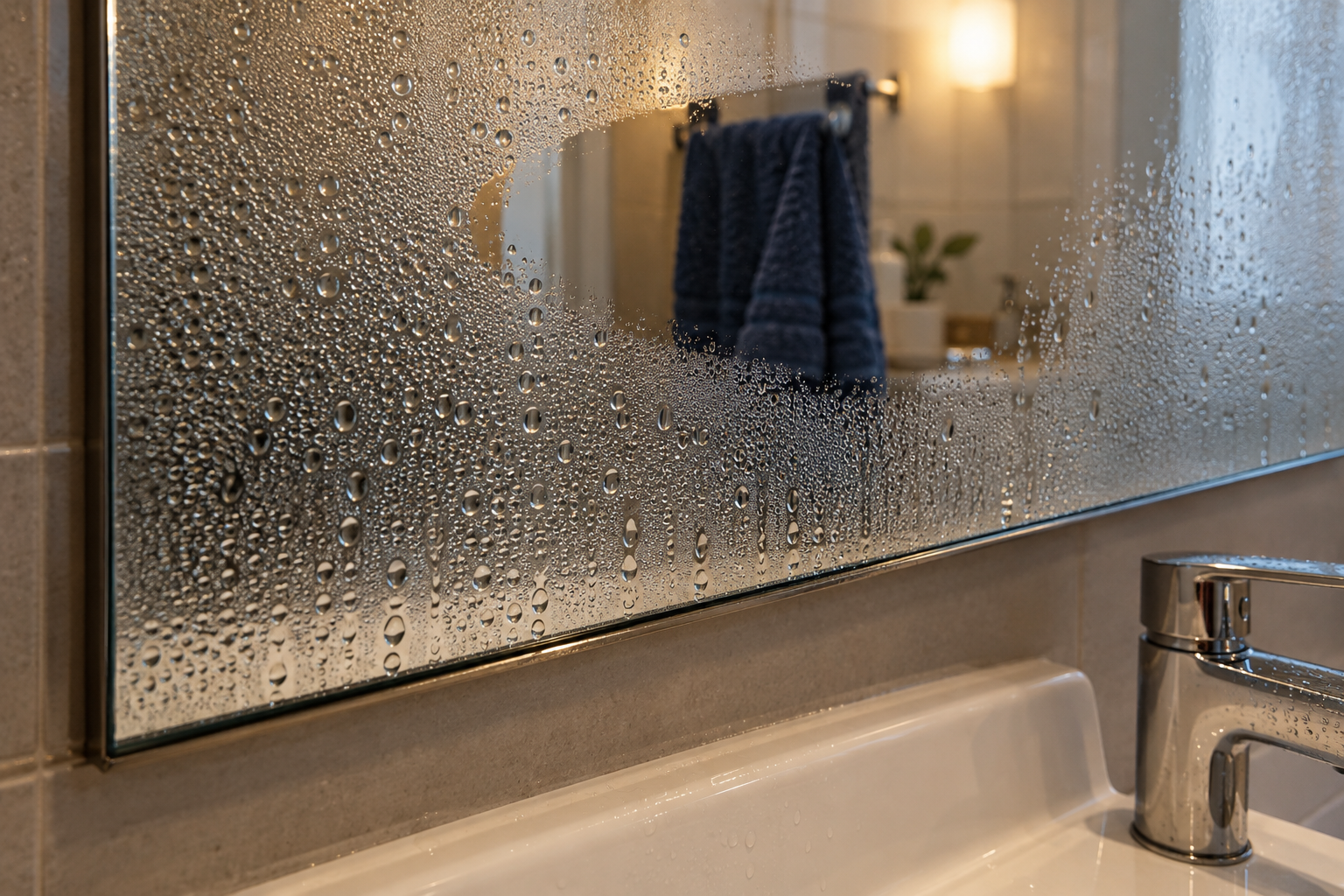
You have probably seen another example on a bathroom mirror. Warm, moist air touches the cooler glass. Water collects on the surface and makes it look foggy. The same change, from gas to liquid, helps explain your visible breath.
Why does the little cloud disappear? It mixes with more of the air around it. The droplets can evaporate again, returning to an invisible form.
Both temperature and the amount of water vapor in the air affect what you see. There is no single temperature at which everyone's breath becomes visible. On a warm day, your breath still contains water vapor. You simply cannot see that gas.
Key Vocabulary
| Word | Meaning |
|---|---|
| vapor | water in the form of a gas |
| condenses | changes from a gas into liquid water |
| droplets | very small drops of liquid |
| evaporate | change from liquid water into a gas |
Reading Questions
- What makes the small white cloud in front of your mouth?
- Can we see water vapor itself?
- What happens to some water vapor when warm breath cools?
- How is a foggy bathroom mirror similar to visible breath?
- What can happen to the droplets as the cloud disappears?
- True or false: Everyone can see their breath at one exact temperature.
- Does your breath contain water vapor on a warm day?
Answers
- Tiny liquid water droplets floating in the air.
- No. Water vapor is an invisible gas.
- It condenses into tiny liquid droplets.
- In both cases, water vapor cools and changes into liquid water.
- They can evaporate and become invisible water vapor again.
- False. Temperature and the amount of water vapor in the air both matter.
- Yes. Your breath still contains water vapor, but you cannot see the gas.
Short Summary
Warm breath cools in cold air. Some invisible water vapor turns into tiny liquid droplets, making a small cloud that soon disappears.
More Easy Readings
Printable Worksheet
Download the three-page PDF: reading and vocabulary, student questions, and a separate answer key.
Science Sources
- Library of Congress: Why Do I See My Breath When It Is Cold Outside?
- UCAR Center for Science Education: Humidity
- National Weather Service: Clouds and Contrails
The images are educational illustrations.
'Nature and Weather' 카테고리의 다른 글
| Why Do Flowers Smell Good? | A2 ESL Science Reading Passage (0) | 2026.10.03 |
|---|---|
| Why Do Tornadoes Form? | A2 ESL Science Reading Passage (0) | 2026.07.08 |
| How Do Rivers Shape the Land? | A2 ESL Science Reading Passage (0) | 2026.06.11 |
| How Do Clouds Form? | A2 ESL Science Reading Passage (0) | 2026.06.08 |
| What Makes Wind? | A2 ESL Science Reading Passage (0) | 2026.06.06 |