

Use this A2-B1 ESL science reading passage to learn why cats purr. It includes key vocabulary, reading comprehension questions, and answers for English learners.
Reading Level
A2-B1
Word Count
282 words
Reading Passage
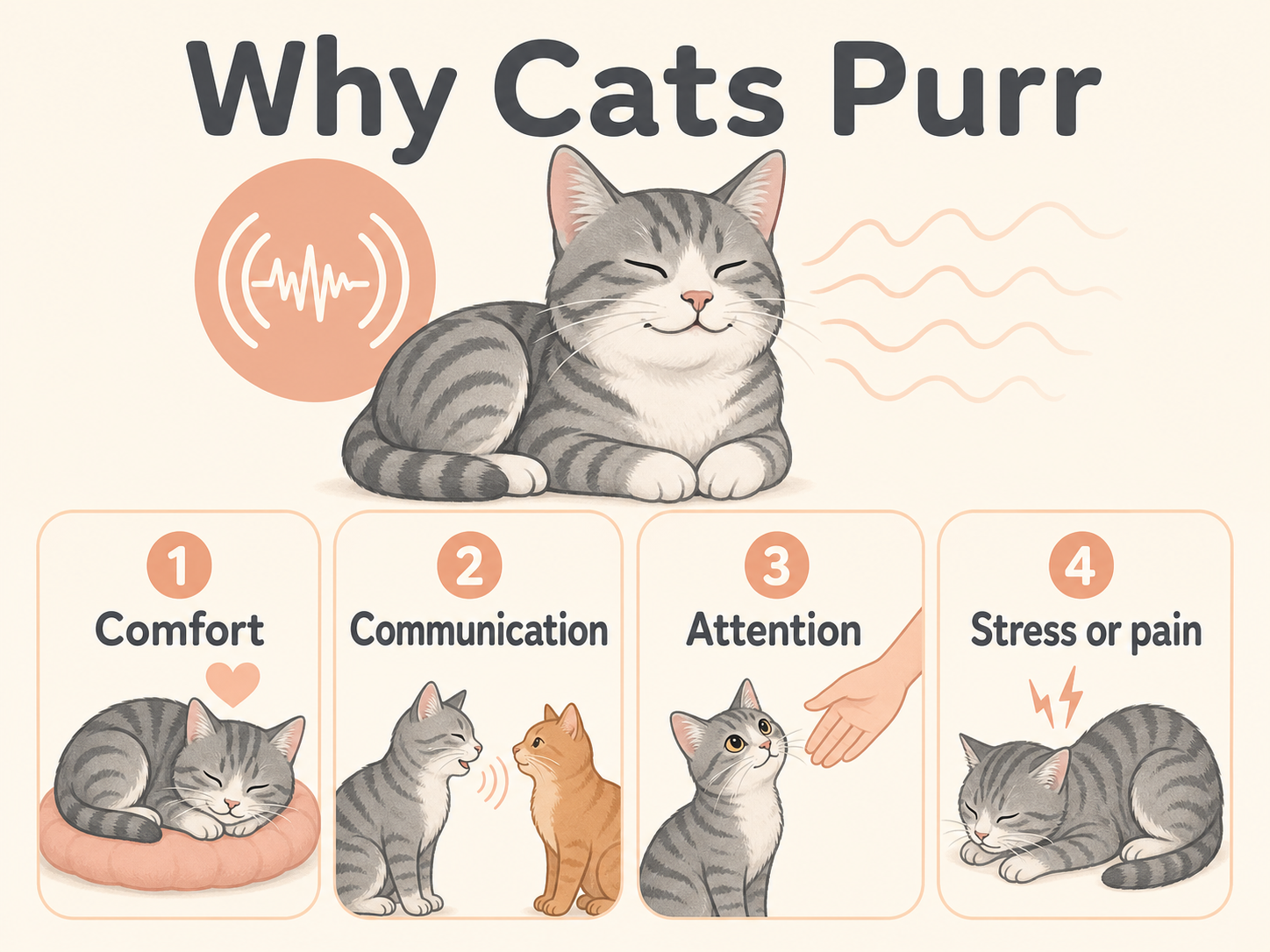
Many people think cats purr only when they are happy. Cats often do purr when they feel safe and comfortable. But purring can mean more than one thing.
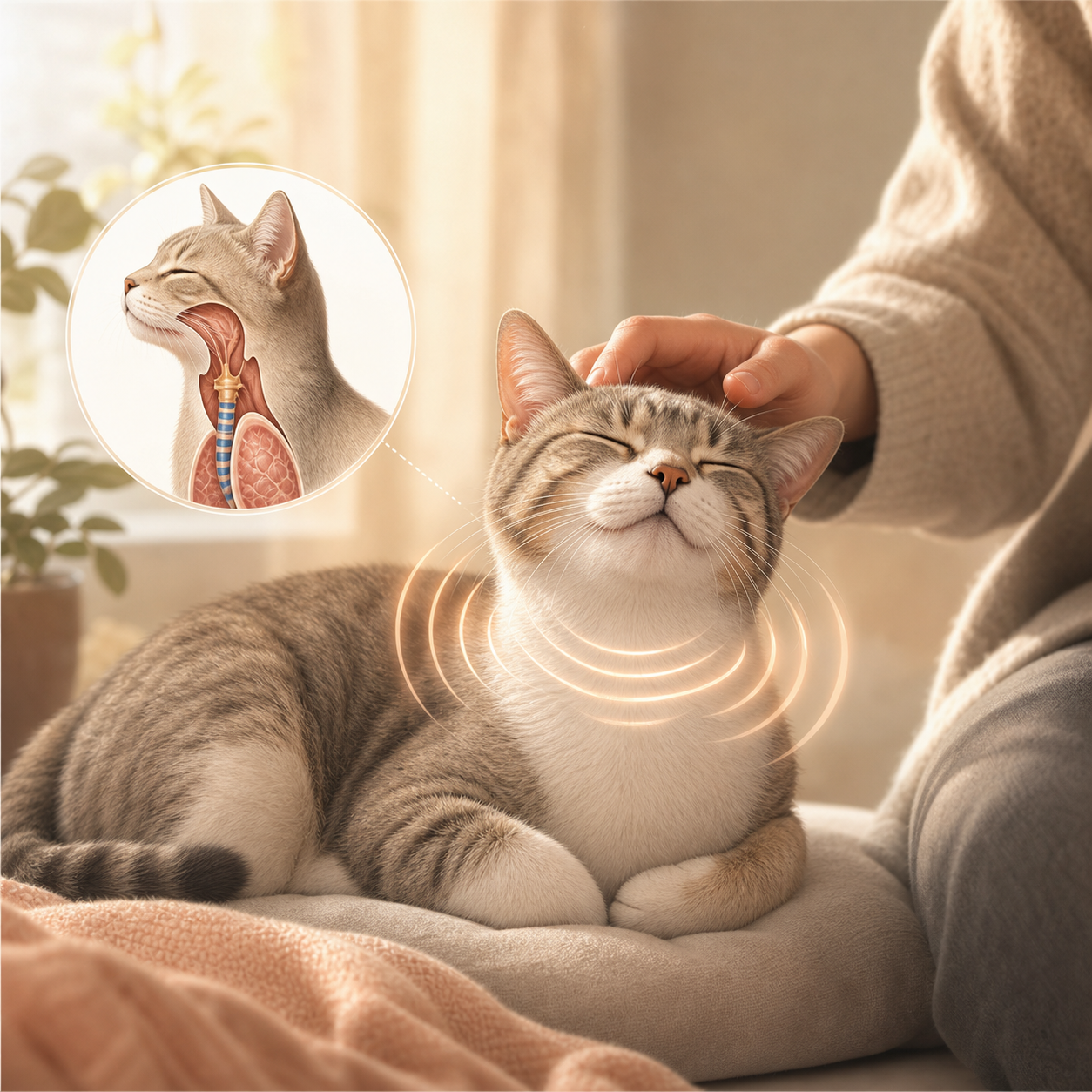
A purr is a low, gentle sound that a cat makes in its throat. Scientists believe cats make this sound by moving muscles near the voice box very quickly. The sound happens while the cat breathes in and out.
Kittens begin to purr when they are very young. A kitten may purr while drinking milk from its mother. The mother cat may purr too. In this way, purring can help cats communicate before kittens can see or hear well.
Adult cats may purr when they sit near a person they trust. This kind of purring can show comfort. A cat may also purr when it wants attention, food, or gentle touch.
However, cats do not purr only in happy moments. Some cats purr when they are scared, sick, or in pain. In these moments, purring may help the cat stay calm during stress. It may also be a way to ask for help.
Because purring can have many meanings, it is important to look at the cat's whole body. A relaxed cat may have soft eyes and a loose body. A worried cat may hide, stop eating, or move away.
Purring is one of the special ways cats express themselves. It can mean happiness, trust, need, or stress. To understand a cat, we must listen and watch carefully.
Key Vocabulary
| Word | Meaning | Example |
|---|---|---|
| purr | a low, gentle sound made by a cat | The cat began to purr on the sofa. |
| communicate | to share information or feelings | Cats communicate with sounds and body language. |
| comfort | a calm and pleasant feeling | The warm blanket gave the kitten comfort. |
| attention | notice or care from someone | The cat wanted attention from its owner. |
| stress | worry or pressure | A cat may purr when it feels stress. |
Reading Comprehension Questions
- Do cats purr only when they are happy?
- Where does a purr come from?
- Why might kittens purr?
- What can purring show in an adult cat?
- Why should we watch a cat's whole body?
Answers
- No. Cats can purr for many reasons.
- A purr is made in the throat near the voice box.
- Kittens may purr to communicate with their mother.
- Purring can show comfort, trust, need, or stress.
- Body language helps us understand what the purr may mean.
Short Summary
Cats purr for many reasons. They may purr when they are happy, comfortable, hungry, stressed, or asking for help. Watching body language helps us understand them.
More Easy Readings
'Animal Science Reading' 카테고리의 다른 글
| Why Do Cats Have Whiskers? | A2 ESL Science Reading Passage (0) | 2026.06.05 |
|---|---|
| Why Do Animals Have Tails? | A2 ESL Science Reading Passage (0) | 2026.06.03 |
| How Do Fish Breathe Underwater? | A2 ESL Science Reading Passage (0) | 2026.05.30 |
| How Do Ants Find Food? | A2 ESL Science Reading Passage (0) | 2026.05.29 |
| Why Do Dogs Wag Their Tails? | A2 ESL Science Reading Passage (0) | 2026.05.27 |