

Use this A2-B1 ESL science reading passage to learn why cats have whiskers. It includes key vocabulary, reading comprehension questions, and answers for English learners.
Reading Level
A2-B1
Word Count
241 words
Reading Passage
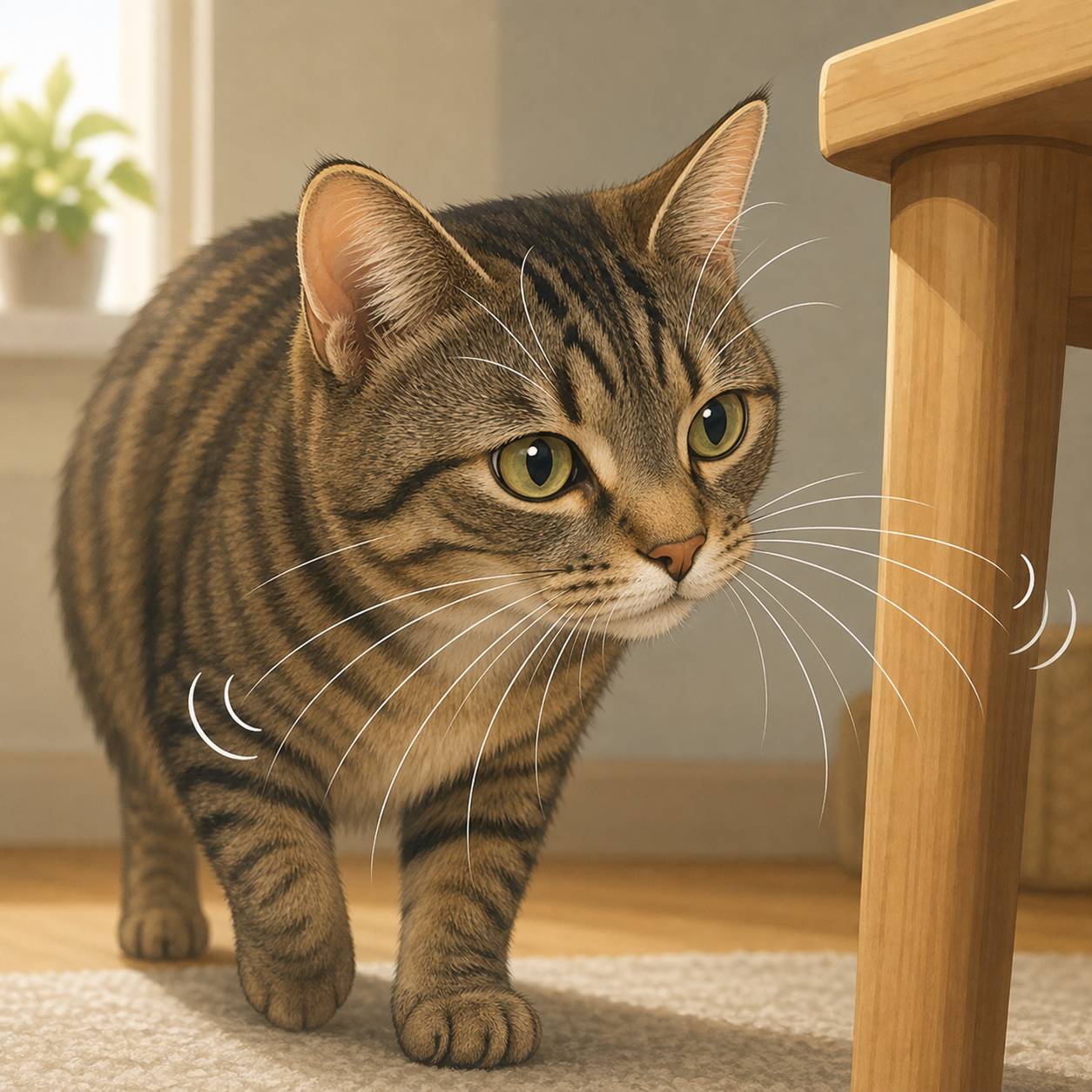
Cats have long hairs on their faces called whiskers. These hairs may look simple, but they are very important. Whiskers help cats understand the world around them.
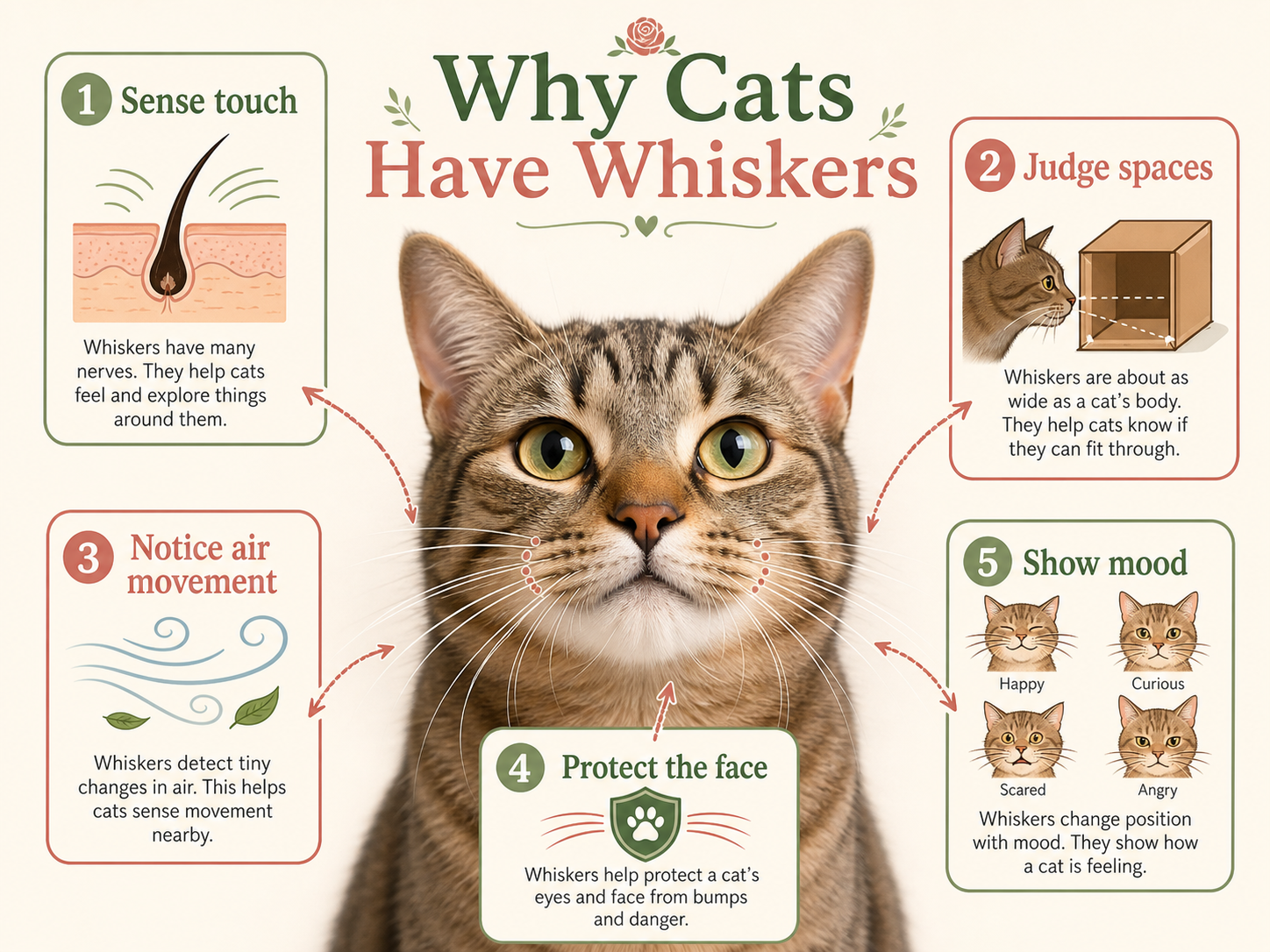
A whisker is thicker and deeper than normal fur. The root of each whisker is connected to many nerves. Because of this, a cat can feel small touches and changes near its face.
Whiskers help cats judge space. If a cat wants to walk through a narrow opening, its whiskers can help it know if the space is wide enough. This is useful when a cat moves in dark places or tight corners.
Whiskers also help cats notice movement in the air. When something moves nearby, the air may move too. A cat's whiskers can feel these tiny changes. This helps the cat notice objects, people, or animals around it.
Cats also have whiskers above their eyes and near their legs. These whiskers can help protect the cat. If something touches the whiskers near the eyes, the cat may blink or move away. This can help keep the face safe.
Whiskers can also show a cat's mood. Relaxed whiskers may point out to the sides. Whiskers pulled back can mean fear or stress. Whiskers pushed forward can show interest or excitement.
People should not cut a cat's whiskers. Without them, a cat may feel confused or less confident. Whiskers are not just decoration. They are useful tools that help cats sense, move, and communicate.
Key Vocabulary
| Word | Meaning | Example |
|---|---|---|
| whiskers | long, sensitive hairs on an animal's face | The cat's whiskers touched the box. |
| nerves | body parts that send messages to the brain | Nerves help the cat feel small touches. |
| movement | a change in position or place | The whiskers can sense movement in the air. |
| safe | not in danger | Whiskers help keep the cat's face safe. |
| mood | the way someone or an animal feels | A cat's whiskers can show its mood. |
Reading Comprehension Questions
- What are whiskers?
- Why can cats feel small touches with their whiskers?
- How do whiskers help cats in narrow spaces?
- Where else do cats have whiskers besides the face?
- Why should people not cut a cat's whiskers?
Answers
- Whiskers are long, sensitive hairs on a cat's face and body.
- The roots of whiskers are connected to many nerves.
- Whiskers help cats judge if a space is wide enough.
- Cats also have whiskers above their eyes and near their legs.
- Without whiskers, a cat may feel confused or less confident.
Short Summary
Cats have whiskers to sense touch, judge spaces, notice air movement, protect the face, and show mood. Whiskers are useful tools, not just decoration.
More Easy Readings
'Animal Science Reading' 카테고리의 다른 글
| Why Do Owls Sleep During the Day? | A2 ESL Science Reading Passage (0) | 2026.06.07 |
|---|---|
| Why Do Frogs Croak? | A2 ESL Science Reading Passage (0) | 2026.06.05 |
| Why Do Animals Have Tails? | A2 ESL Science Reading Passage (0) | 2026.06.03 |
| Why Do Cats Purr? | A2 ESL Science Reading Passage (0) | 2026.06.01 |
| How Do Fish Breathe Underwater? | A2 ESL Science Reading Passage (0) | 2026.05.30 |