Use this A2-B1 ESL science reading passage to learn why stars twinkle. It includes key vocabulary, reading comprehension questions, and answers for English learners.
Reading Level
A2-B1
Word Count
183 words
Reading Passage
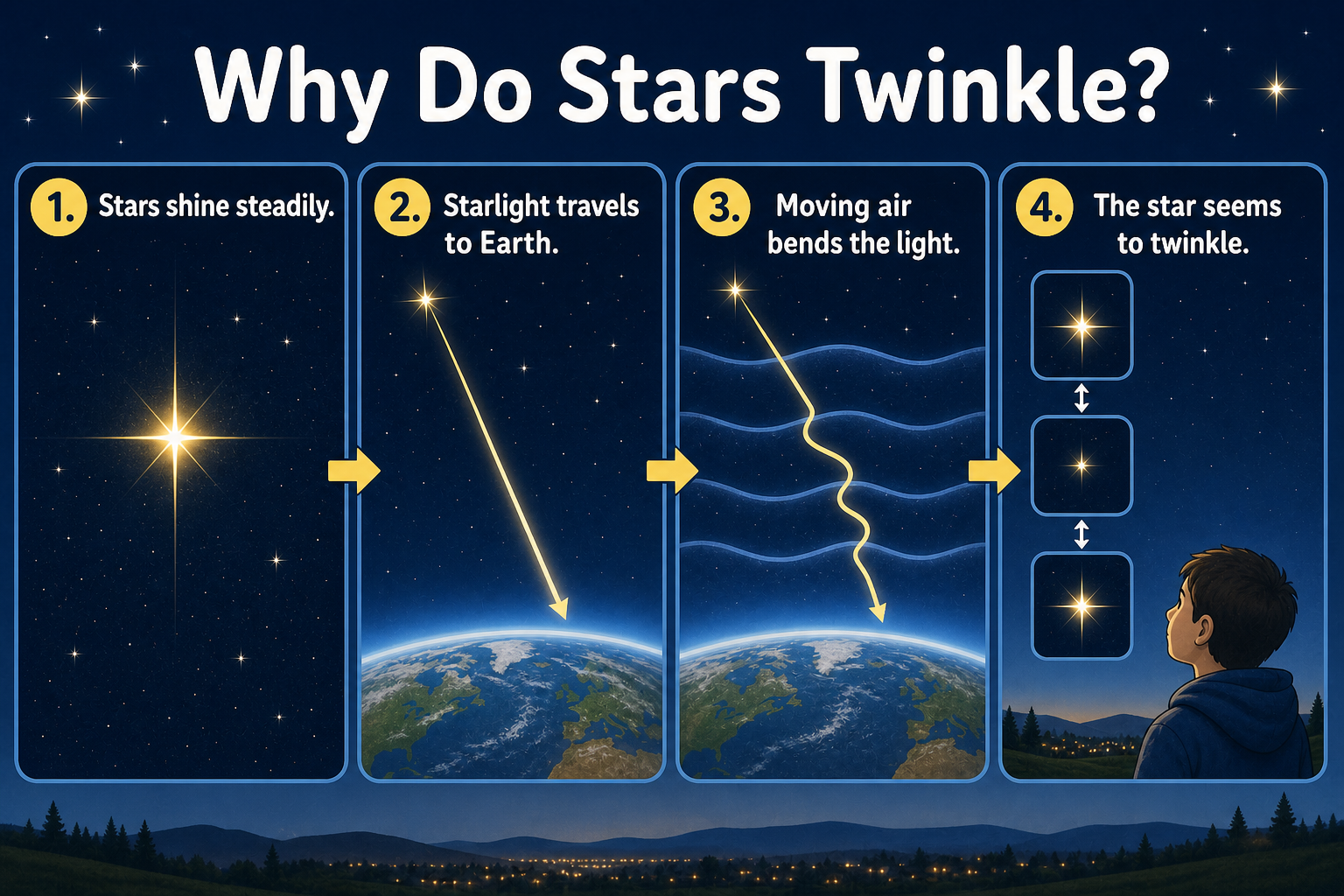
On a clear night, stars can look like tiny lights that blink. They may seem bright, then dim, then bright again. This small change is called twinkle.
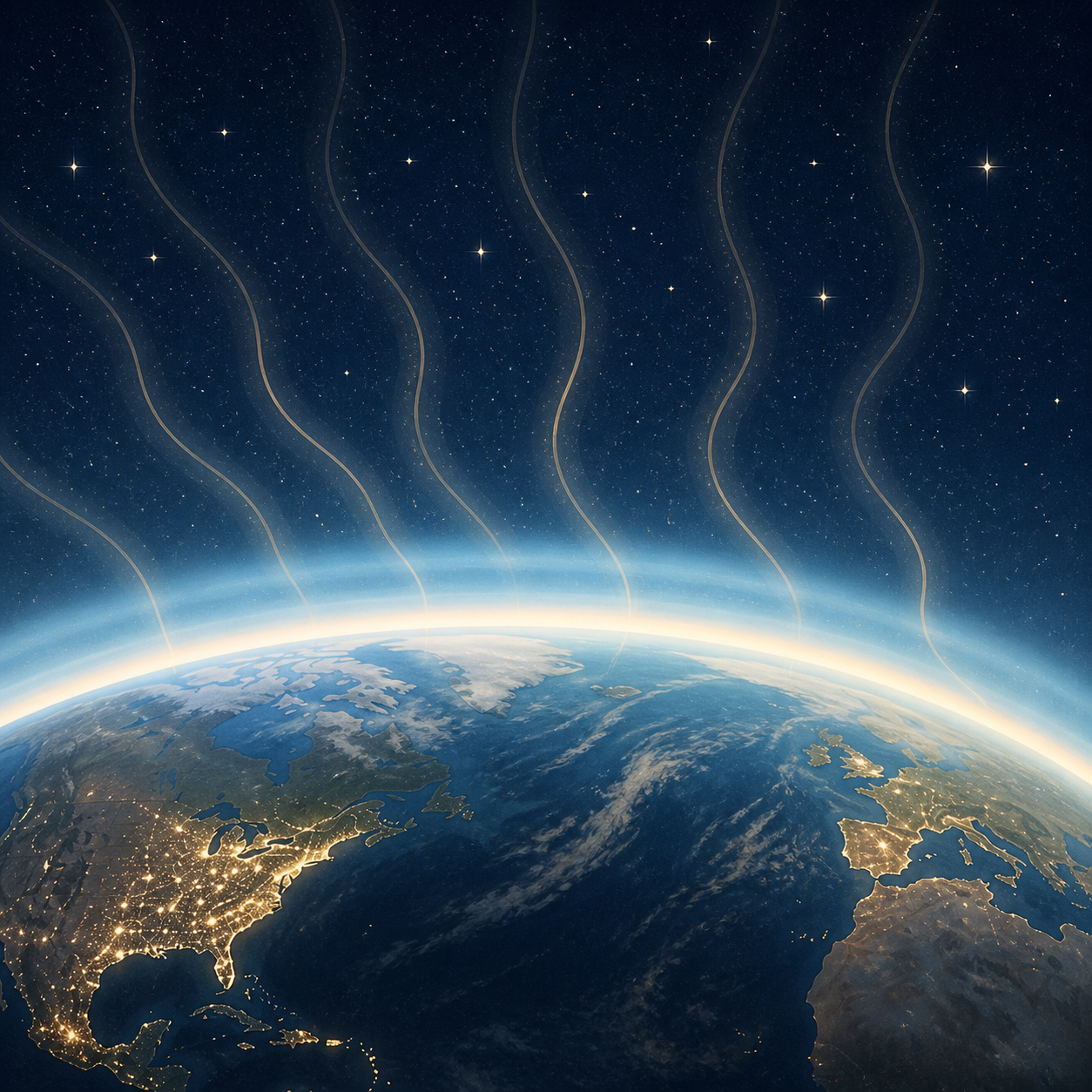
Stars do not really turn on and off. Most stars shine steadily in space. They only look like they twinkle because their light passes through Earth's atmosphere before it reaches our eyes.
The atmosphere is not still. It has moving air and layers with different temperatures. As starlight travels through these layers, the light can bend a little. It can also change direction many times before it reaches the ground.
These small changes make the star look as if it is moving or changing brightness. To our eyes, the star seems to twinkle.
Planets can also shine in the night sky, but they usually twinkle less than stars. This is because planets are much closer to Earth. They look like tiny disks, not tiny points of light. The atmosphere still affects their light, but the effect is often less easy to see.
Twinkling stars show us that space and Earth's air work together in what we see at night.
Key Vocabulary
| Word | Meaning | Example |
|---|---|---|
| twinkle | to shine with small changes in brightness | Stars twinkle in the night sky. |
| atmosphere | the layer of air around Earth | Starlight passes through the atmosphere. |
| starlight | light that comes from a star | Starlight travels a long distance. |
| bend | to change direction | Air can bend light a little. |
| planet | a large object that moves around a star | Venus is a bright planet in the sky. |
Reading Comprehension Questions
- What does it mean when a star twinkles?
- Do stars really turn on and off?
- What does starlight pass through before it reaches our eyes?
- Why can starlight bend in the atmosphere?
- Why do planets usually twinkle less than stars?
Answers
- It means the star seems to change brightness.
- No, most stars shine steadily in space.
- It passes through Earth's atmosphere.
- It bends because the atmosphere has moving air and layers with different temperatures.
- Planets usually twinkle less because they look like tiny disks, not tiny points of light.
Short Summary
Stars seem to twinkle because moving air in Earth's atmosphere bends their light before it reaches our eyes.
More Easy Readings
'Space and Earth' 카테고리의 다른 글
| What Is Gravity? | A2 ESL Science Reading Passage (0) | 2026.06.22 |
|---|---|
| Why Do We Have Time Zones? | A2 ESL Science Reading Passage (0) | 2026.06.21 |
| Why Do Shadows Change During the Day? | A2 ESL Science Reading Passage (0) | 2026.06.16 |
| Why Does the Moon Change Shape? | A2 ESL Science Reading Passage (0) | 2026.05.31 |
| Why Do Volcanoes Erupt? | A2 ESL Science Reading Passage (0) | 2026.05.30 |