Use this A2-B1 ESL science reading passage to learn what a glacier is. It includes key vocabulary, reading comprehension questions, and answers for English learners.
Reading Level
A2-B1
Word Count
236 words
Reading Passage
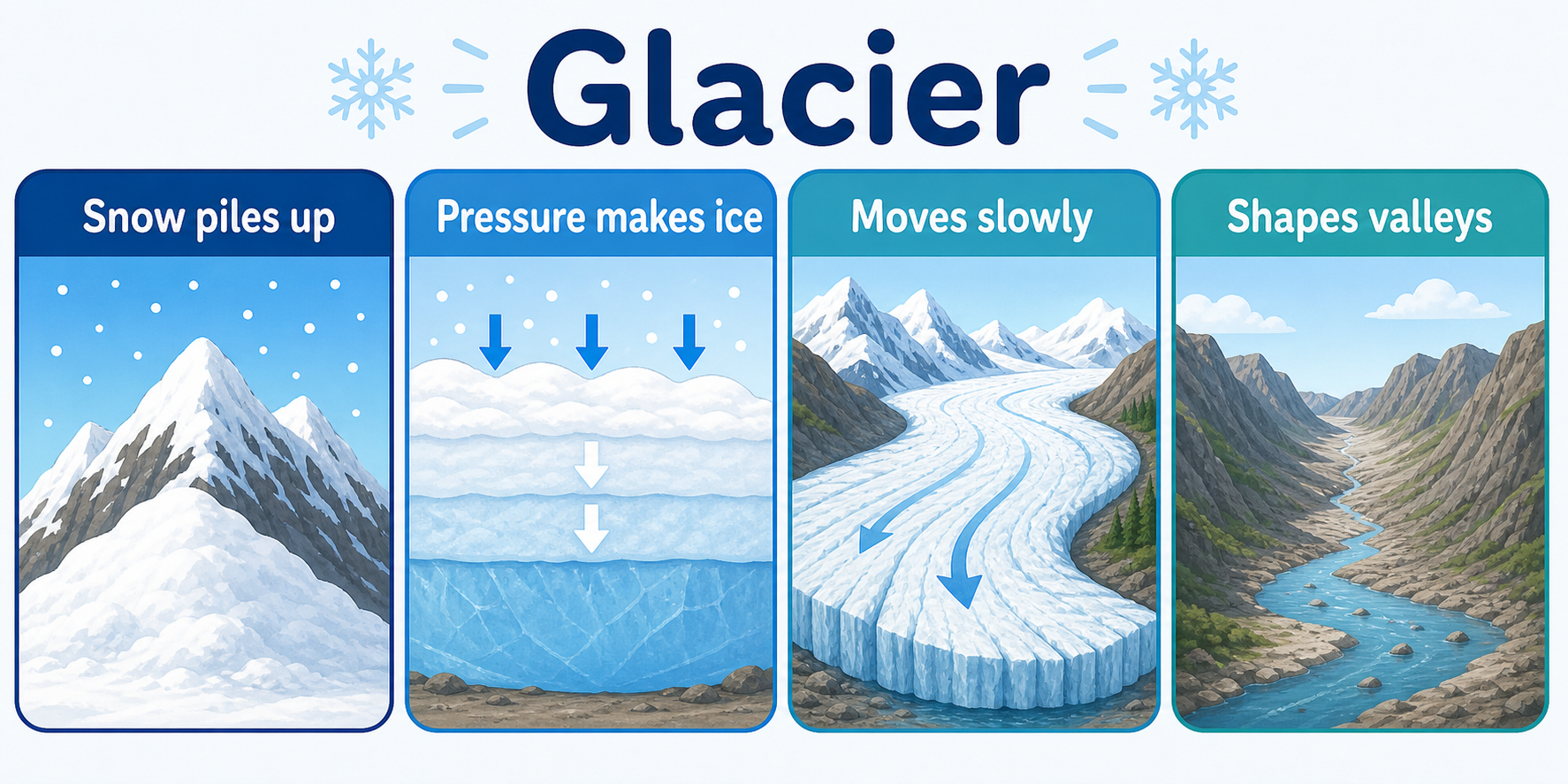
A glacier is a very large body of ice. It forms in places where more snow falls in winter than melts in summer.
Over many years, snow piles up. The top layers press down on the older snow below. This pressure squeezes the snow and changes it into hard ice.
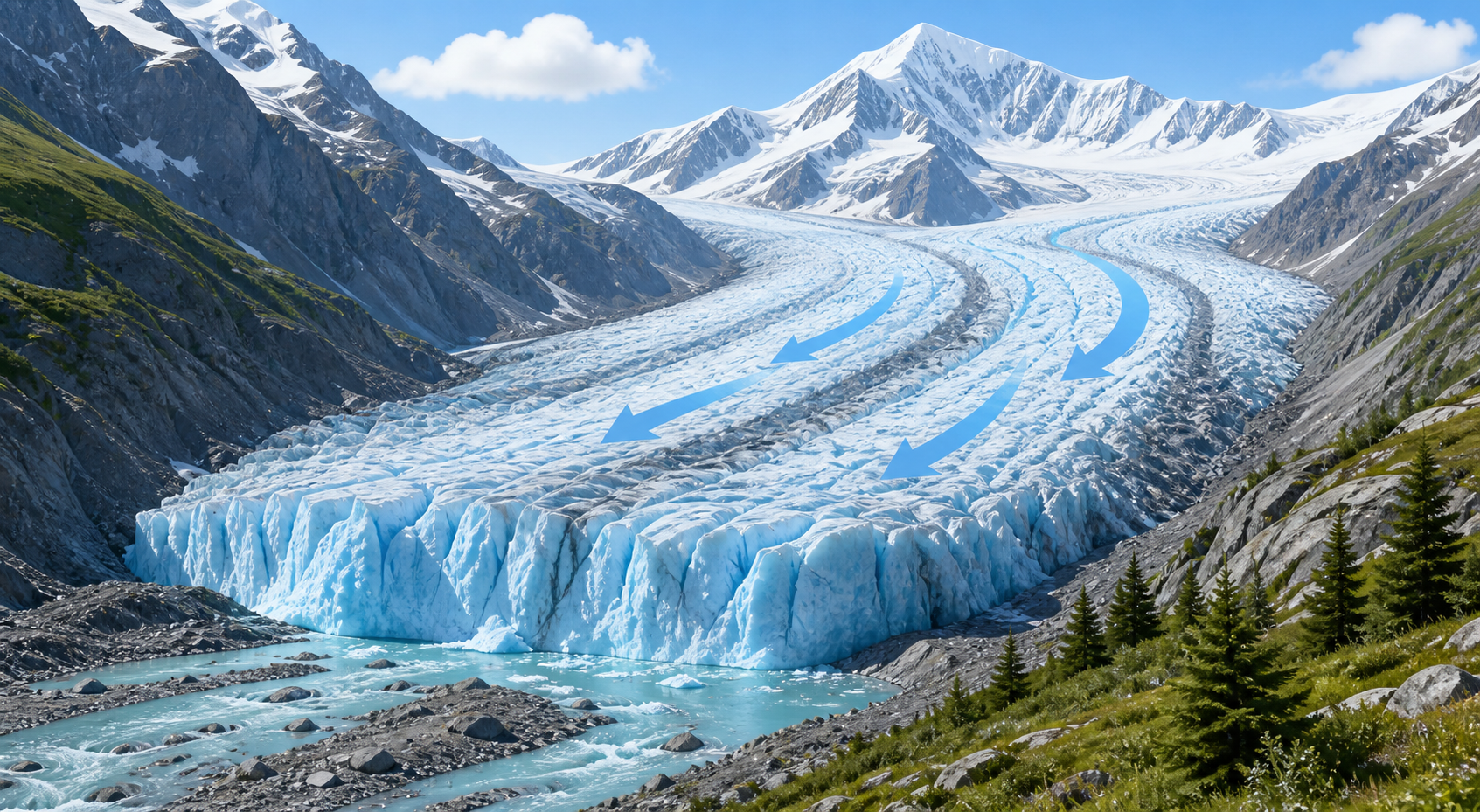
When the ice becomes very thick and heavy, it begins to move. A glacier moves very slowly, often only a little each day. It may look still, but it is flowing like a very slow river of ice.
Glaciers can move down mountains and through a valley. As they move, they can scrape rocks and soil. They can make valleys wider and leave marks on the land.
Some glaciers are on mountains. Others are part of huge ice sheets near Earth's poles. Glaciers store a lot of Earth's fresh water.
Glaciers are important to scientists. Changes in glaciers can show changes in climate. When the air becomes warmer, some glaciers can melt faster.
A glacier is not just frozen water sitting still. It is a huge, slow-moving mass of ice that can shape land and help us understand Earth.
Key Vocabulary
| Word | Meaning | Example |
|---|---|---|
| glacier | a huge mass of ice that moves slowly over land | A glacier can move through a valley. |
| snow | soft white frozen water that falls from clouds | Snow can pile up on mountains. |
| ice | frozen water | Snow can turn into hard ice. |
| pressure | force or weight pushing on something | Pressure changes snow into ice. |
| valley | low land between hills or mountains | A glacier can move through a valley. |
Reading Comprehension Questions
- What is a glacier?
- Where can glaciers form?
- What changes snow into hard ice?
- How fast does a glacier move?
- Why are glaciers important to scientists?
Answers
- A glacier is a huge mass of ice that moves slowly over land.
- They can form where more snow falls than melts.
- Pressure from upper layers changes snow into ice.
- It moves very slowly, often only a little each day.
- Changes in glaciers can show changes in climate.
Short Summary
A glacier forms when snow builds up and turns into thick ice. Glaciers move slowly, shape land, and store fresh water.
More Easy Readings
'Space and Earth' 카테고리의 다른 글
| Why Do Earthquakes Happen? | A2 ESL Science Reading Passage (0) | 2026.06.30 |
|---|---|
| What Is a Volcano Island? | A2 ESL Science Reading Passage (0) | 2026.06.25 |
| What Is a Lunar Eclipse? | A2 ESL Science Reading Passage (0) | 2026.06.24 |
| What Is a Solar Eclipse? | A2 ESL Science Reading Passage (0) | 2026.06.24 |
| Why Does the Sun Rise and Set? | A2 ESL Science Reading Passage (0) | 2026.06.22 |