


On some cold mornings, grass and windows look white and sparkling. This short reading explains how frost forms, with vocabulary and questions for English learners.
Reading Level: A2-B1 · Word Count: 204 words in the reading passage.
Tap a marked word to find its meaning in the vocabulary table.
Reading Passage
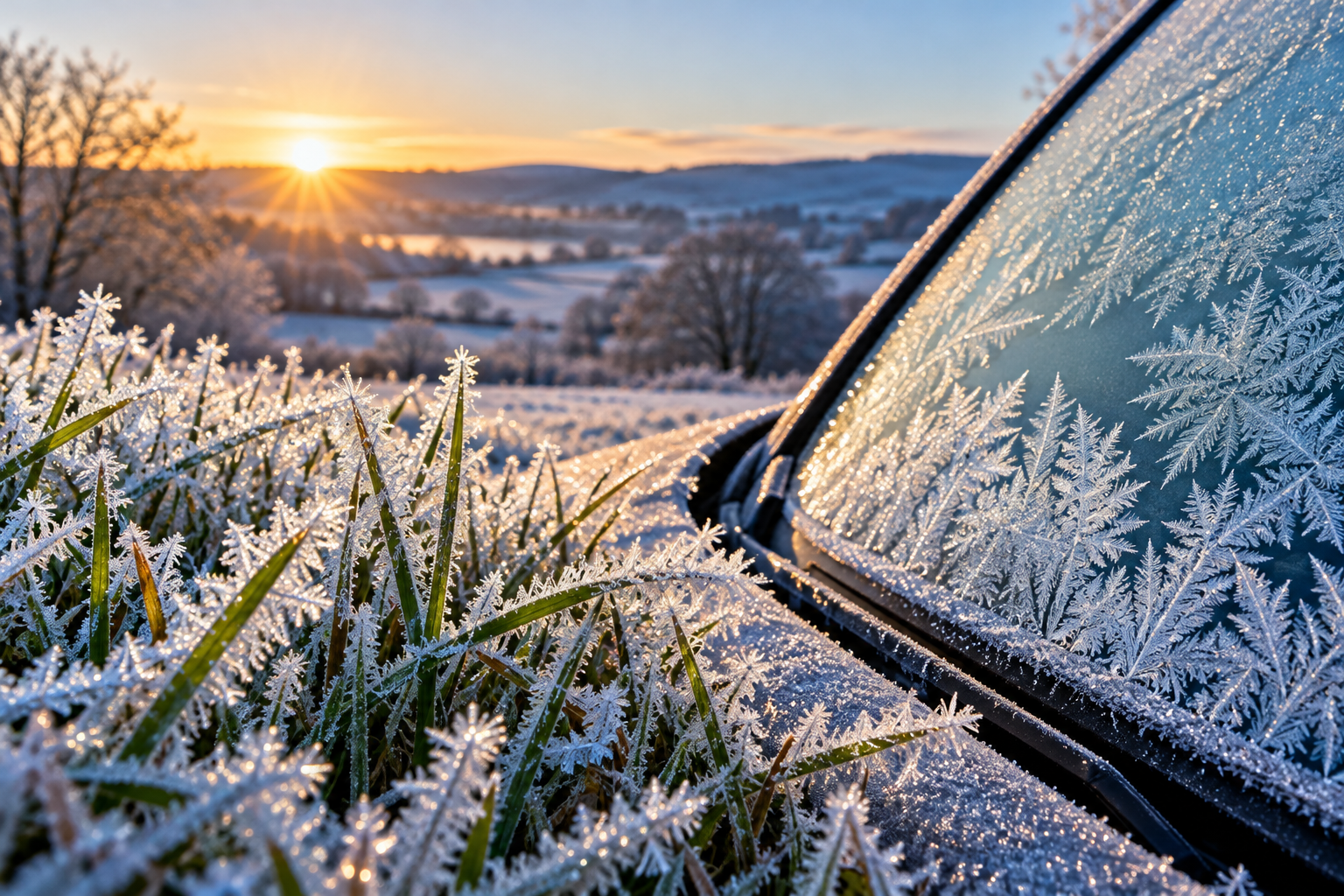
You look outside on a cold morning and see white patterns on the grass. A car window is covered in them too. This thin layer of ice is called frost. It can form even when it has not snowed.
The air contains water vapor. At night, the ground and objects near it can lose heat and become cold. If a surface becomes cold enough and the air next to it reaches the frost point, water vapor can turn directly into ice on that surface. It does not have to become liquid water first.
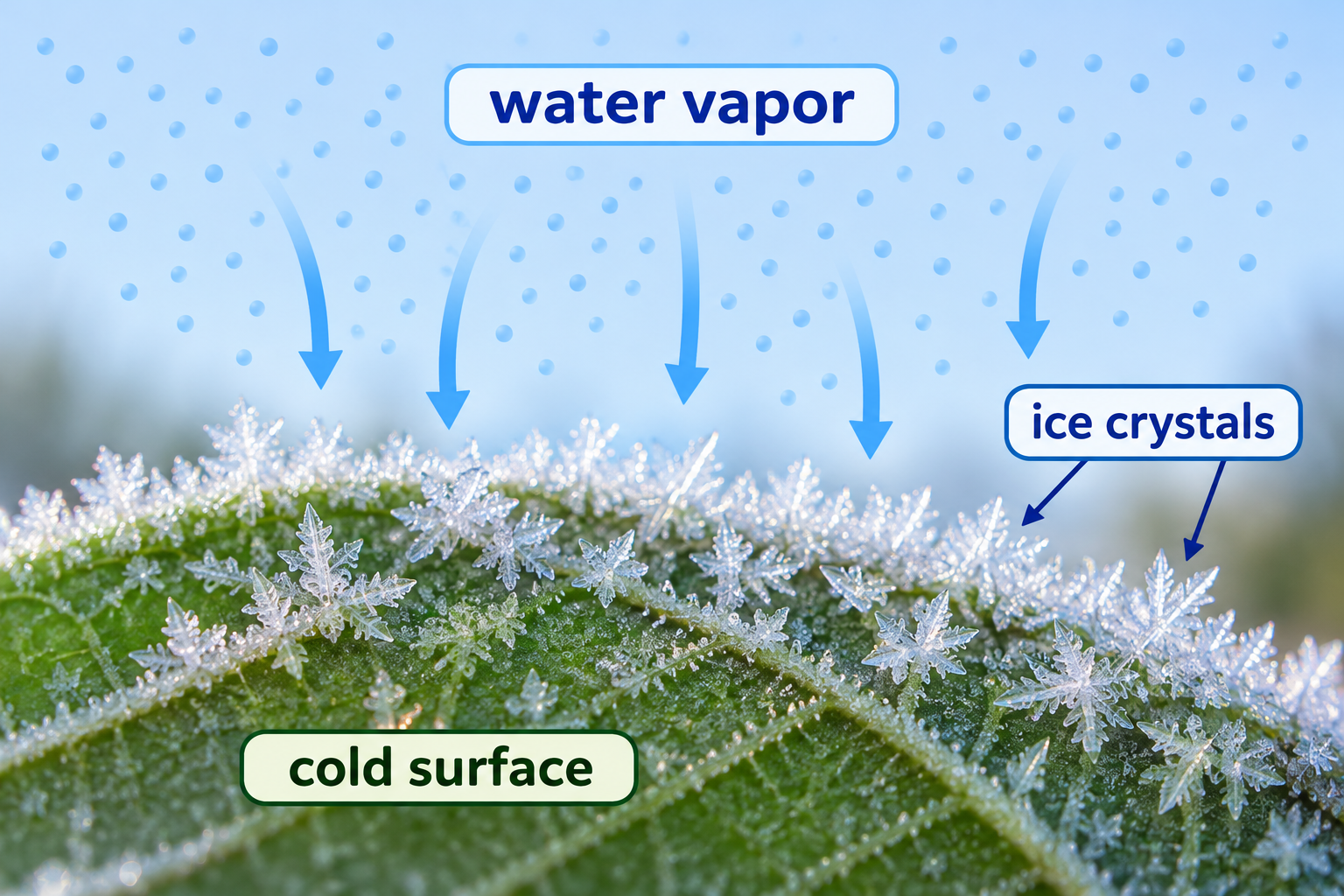
The tiny pieces of ice are called crystals. They can grow into delicate patterns on leaves, glass, and other surfaces. In the picture, the blue dots stand for water vapor, which is invisible to our eyes.
Frost is different from snow. Snow forms in clouds and falls to the ground. Frost forms on a surface where the air and the surface are cold enough. Sometimes dew forms as liquid water first and freezes later; that is called frozen dew.
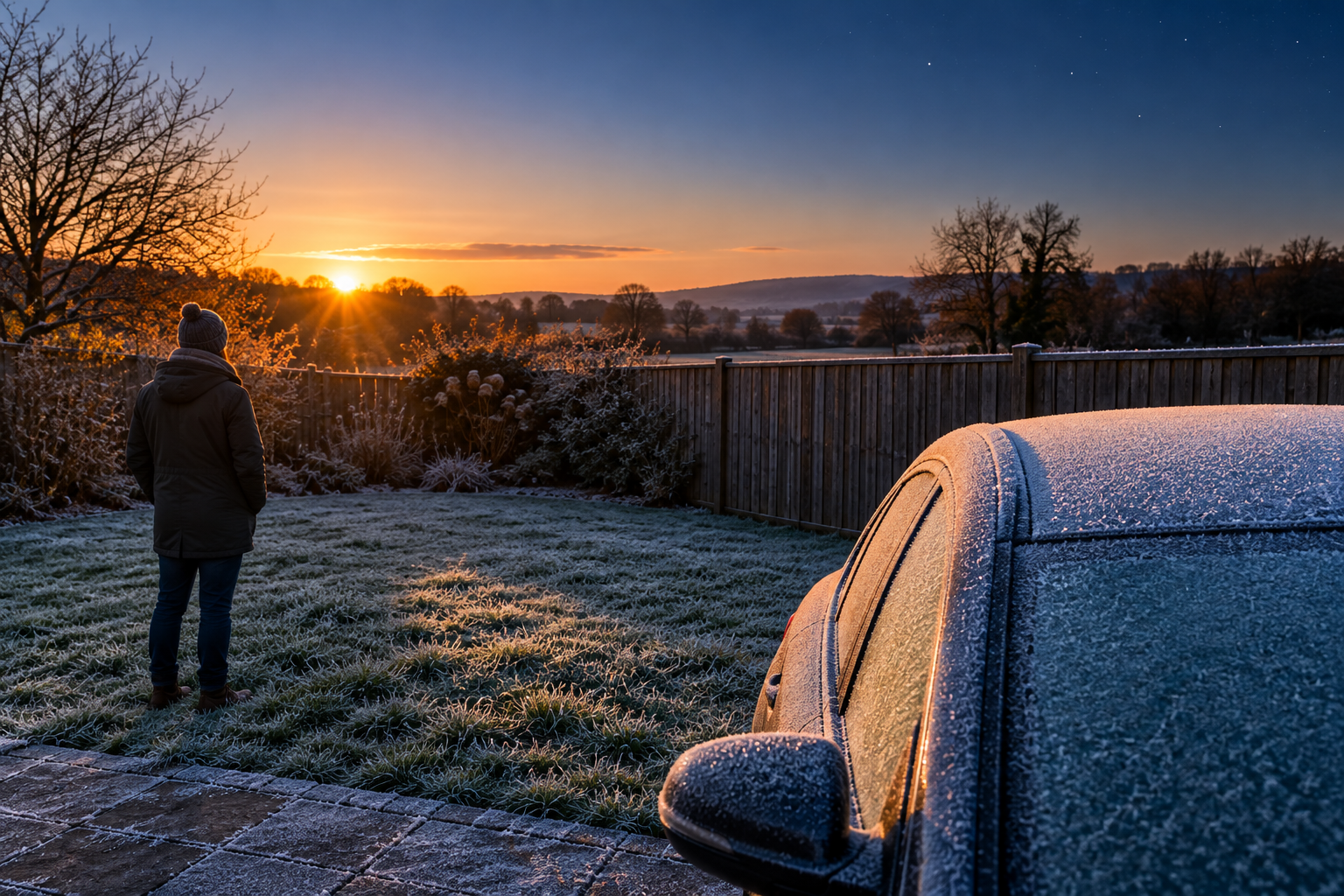
Different objects can cool at different rates. A car roof may have frost while a nearby wall has little or none. After sunrise, frost can melt or disappear as the surface warms.
Key Vocabulary
| Word | Meaning |
|---|---|
| frost | a thin layer of ice crystals on a cold surface |
| vapor | water in the form of an invisible gas |
| crystals | small pieces of a solid with an ordered shape |
| surface | the outside of an object |
Reading Questions
- What is the thin white layer on the grass called?
- Can we see water vapor itself?
- What can water vapor become on a cold surface?
- Does the vapor have to become liquid water before frost forms?
- Where does snow form?
- What is frozen dew?
- Why might a car roof and a nearby wall have different amounts of frost?
Answers
- Frost.
- No. Water vapor is an invisible gas.
- It can change directly into ice crystals.
- No. It can turn directly into ice.
- In clouds.
- Liquid dew that freezes after it forms.
- Different objects can cool at different rates.
Short Summary
Frost can form when water vapor changes directly into ice crystals on a cold surface. Snow forms in clouds instead.
More Easy Readings
Science Sources
The images are educational illustrations.
'Nature and Weather' 카테고리의 다른 글
| Why Can You See Your Breath in Cold Weather? | Easy Reading with Questions (0) | 2026.10.22 |
|---|---|
| Why Do Flowers Smell Good? | A2 ESL Science Reading Passage (0) | 2026.10.03 |
| Why Do Tornadoes Form? | A2 ESL Science Reading Passage (0) | 2026.07.08 |
| How Do Rivers Shape the Land? | A2 ESL Science Reading Passage (0) | 2026.06.11 |
| How Do Clouds Form? | A2 ESL Science Reading Passage (0) | 2026.06.08 |