


Why can walking downstairs feel difficult the day after exercise? This short English reading explains sore muscles and gives you five useful words to practice.
Reading Level: A2–B1 Word Count: 215 words
Read the passage · Try the questionsReading Passage
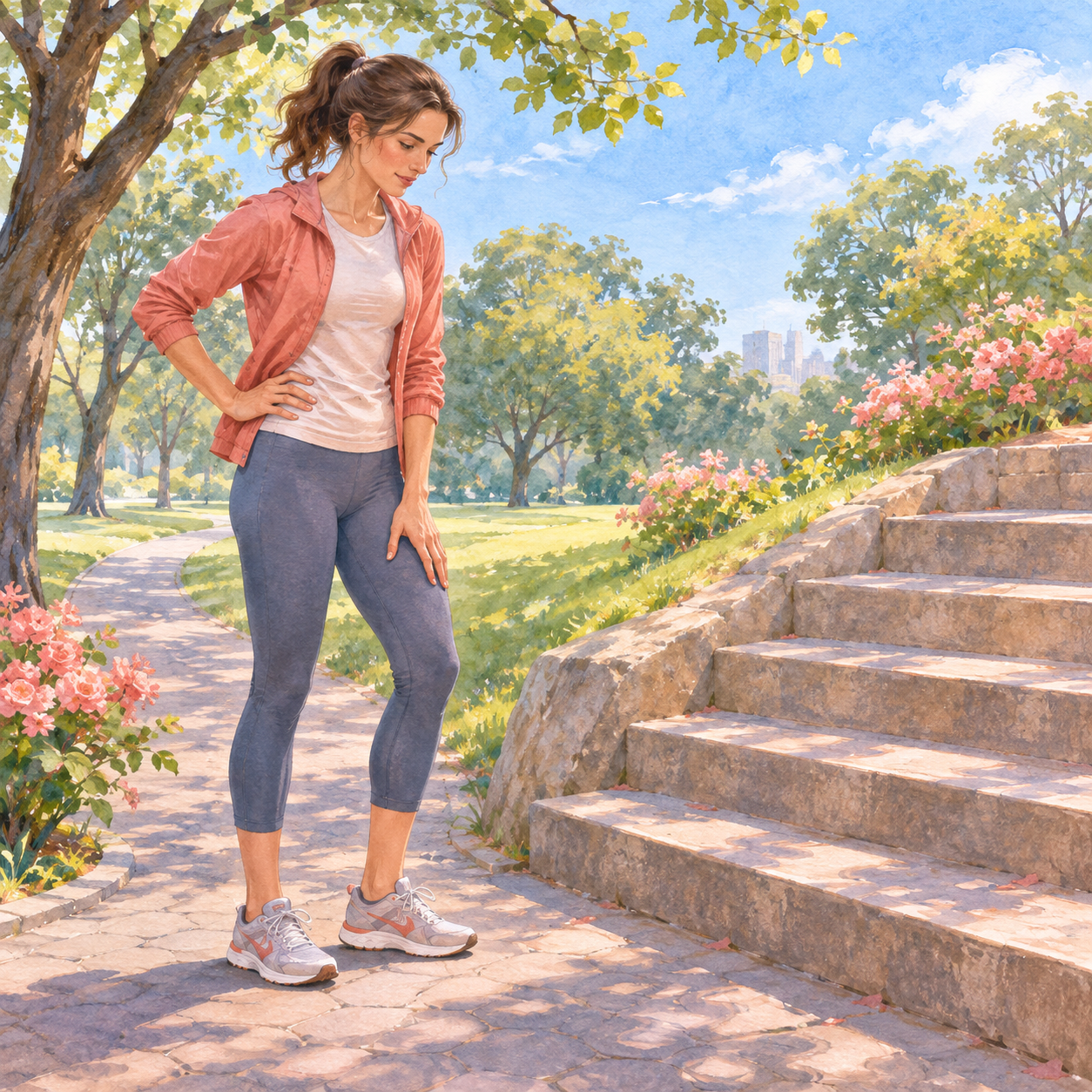
You finish a long walk and feel fine. The next morning, however, your legs feel stiff. Why does the pain arrive later?
Your muscles work harder when you try a new activity. They also work harder when you exercise much longer than usual. This can cause tiny changes and damage inside muscle tissue. Your body starts a repair process, and the area can feel sore.
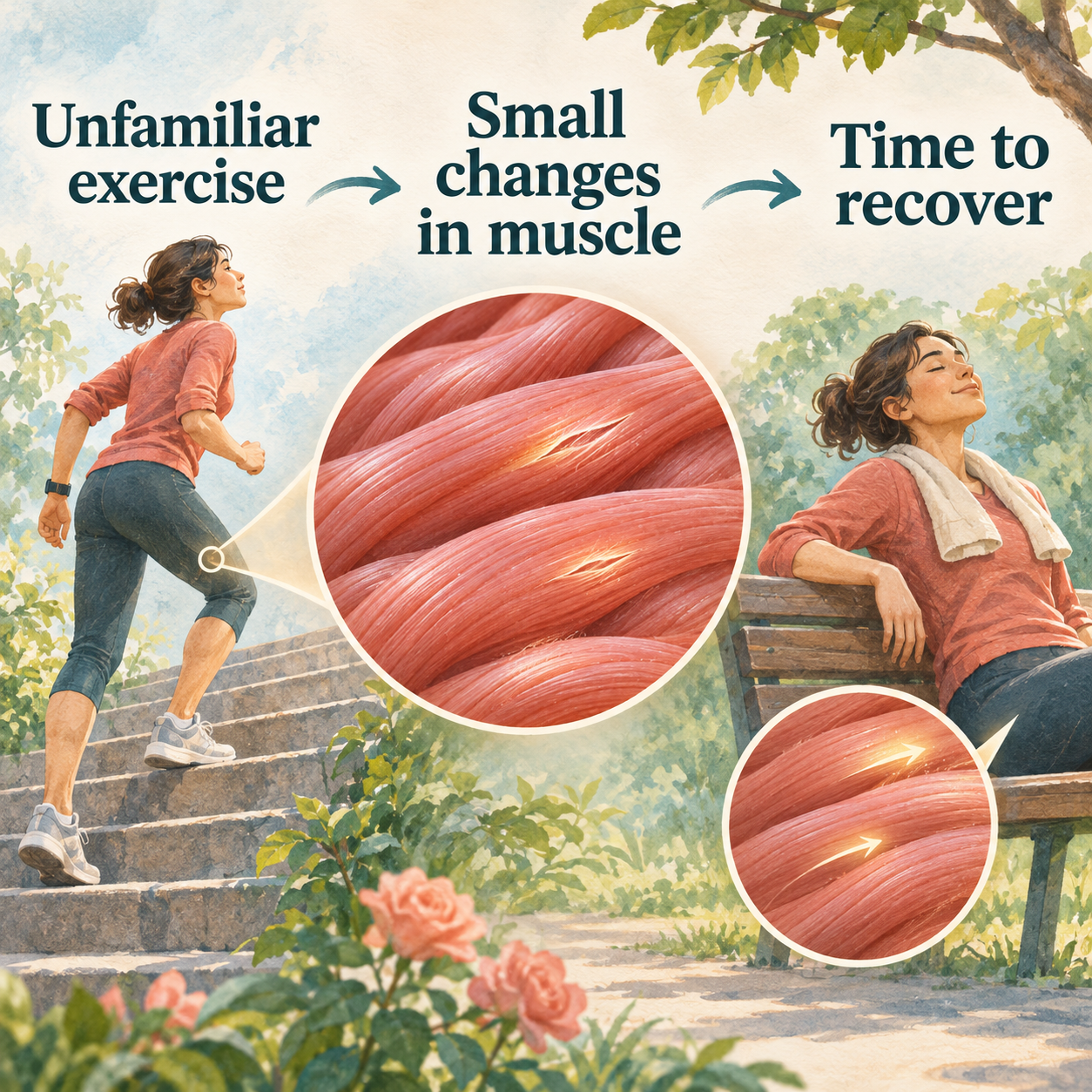
This later soreness has a long name: delayed onset muscle soreness, or DOMS. "Delayed" means that something happens after some time. The soreness often develops after exercise rather than during it. It can affect beginners and experienced athletes.
Sore muscles do not mean that every workout was successful. You can become stronger without feeling sore after every session. Pain is not a goal to chase.
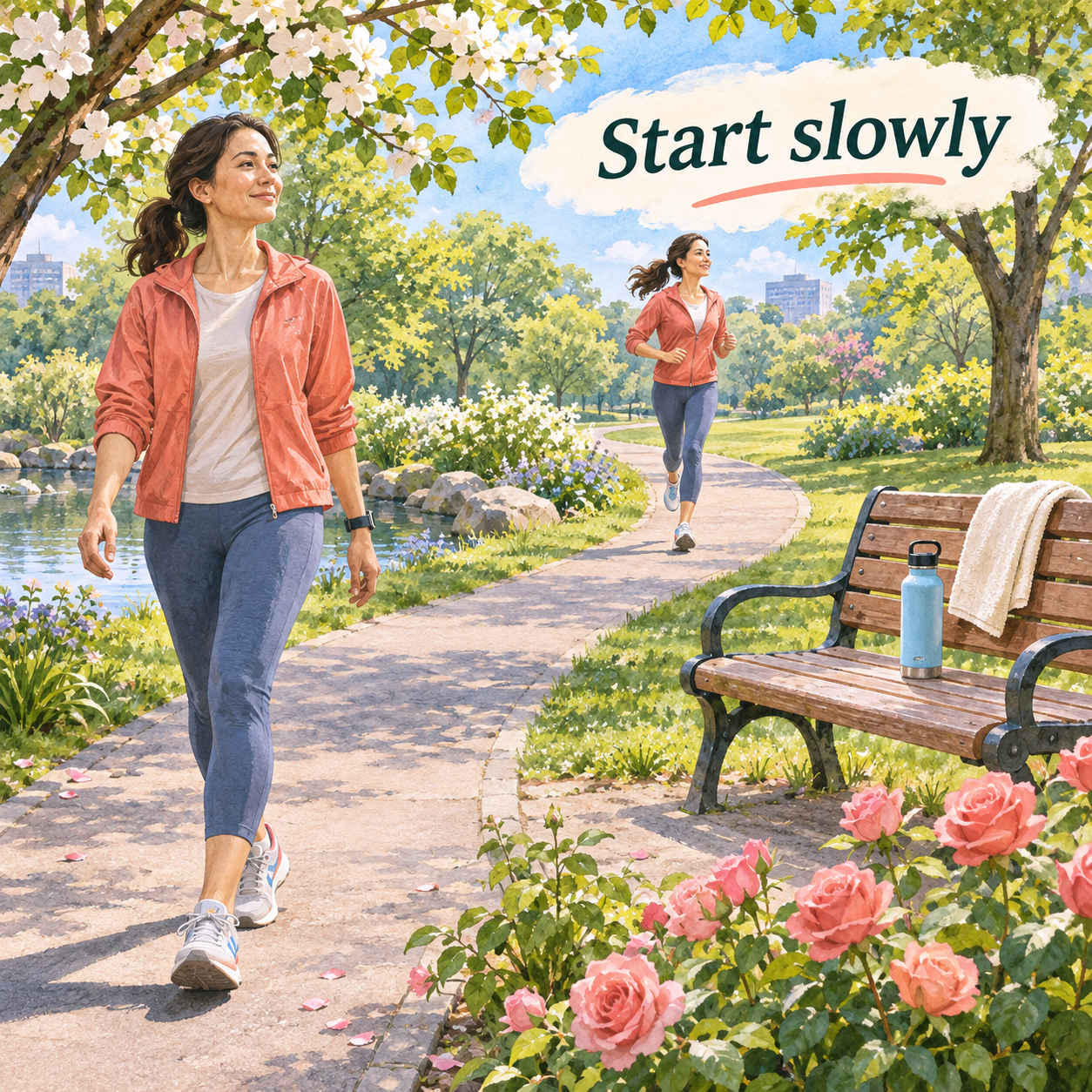
Give your body time to recover. Gentle movement may feel comfortable, but another hard workout can wait. Do not force a painful stretch. Start new activities slowly and increase the effort over time.
Soreness and injury are not always the same. Sudden, sharp pain during exercise deserves attention. Very strong pain, unusual weakness, or dark urine also needs medical help. Do not simply call every pain "normal soreness."
Learning to exercise includes learning to rest. A gradual plan lets your body adapt to new demands.
Key Vocabulary
| Word | Meaning | Example |
|---|---|---|
| muscles | body parts that help you move | My leg muscles help me climb stairs. |
| recover | return to a normal or healthy condition | I rest while my body recovers. |
| effort | the energy used to do something | Running uphill takes more effort. |
| adapt | change to handle something new | Your body needs time to adapt. |
| delayed | happening after some time | The delayed pain began the next day. |
Reading Questions
- Why can a new activity make your muscles sore?
- Does a workout need to cause soreness to be successful?
- Why should you increase exercise effort gradually?
- Name one sign in the passage that needs medical attention.
Answers
- New activity can make muscles work harder and cause small changes and damage in muscle tissue.
- No. You can become stronger without feeling sore after every workout.
- A gradual increase gives the body time to adapt.
- Possible answers include sudden sharp pain, very strong pain, unusual weakness, or dark urine.
Short Summary
Muscles may feel sore after unfamiliar or harder exercise. Give your body recovery time and build new exercise habits gradually.
More Easy Readings
Science Sources
The images are explanatory illustrations.
'Human Body' 카테고리의 다른 글
| Why Do We Have Tears? | A2 ESL Science Reading Passage (0) | 2026.09.21 |
|---|---|
| Why Do We Have Fingerprints? | A2 ESL Science Reading Passage (0) | 2026.07.07 |
| Why Do We Have Eyebrows? | A2 ESL Science Reading Passage (0) | 2026.07.04 |
| How Do Bones Heal? | A2 ESL Science Reading Passage (0) | 2026.07.03 |
| Why Do We Have Nails? | A2 ESL Science Reading Passage (0) | 2026.06.28 |