
A small piece of ice may look almost clear, but a field of snow looks white. The difference has a lot to do with the way light moves through many tiny ice crystals.
Level: A2–B1 · Word count: 228 · Topic: Nature and light
Read the passage · Go to the questions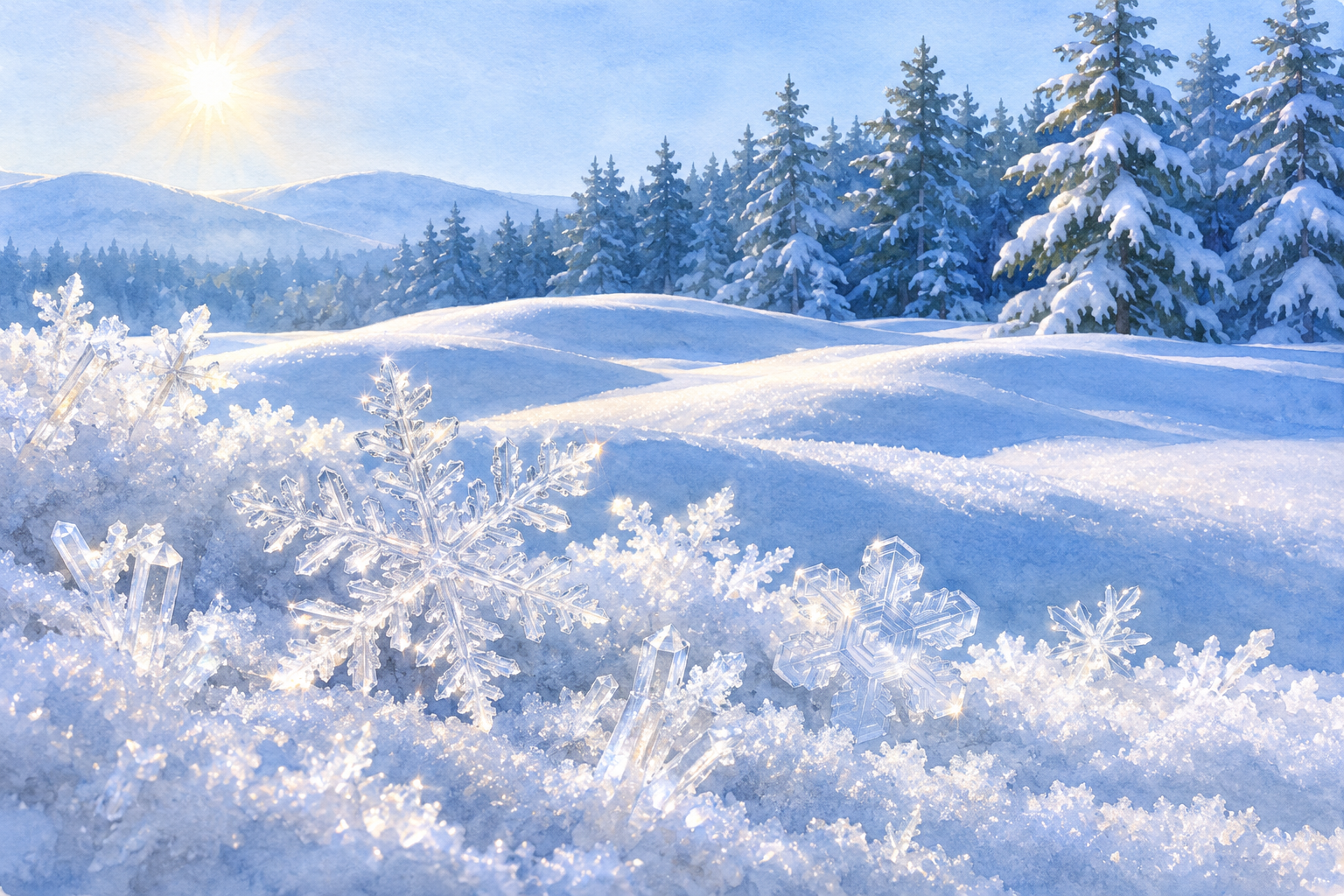
Reading Passage
Snow is made of tiny ice crystals. A single crystal can let light pass through it. Yet thousands of crystals together can make a whole field look bright white. How does this happen?
Sunlight contains many colors. We can see them separately in a rainbow, but together they appear white. When sunlight reaches snow, it meets many small surfaces pointing in different directions.
Some light enters a crystal. Some is sent in another direction. The light then meets more crystals and changes direction again. This process is called scattering. Instead of passing straight through the snow, much of the light travels back out.
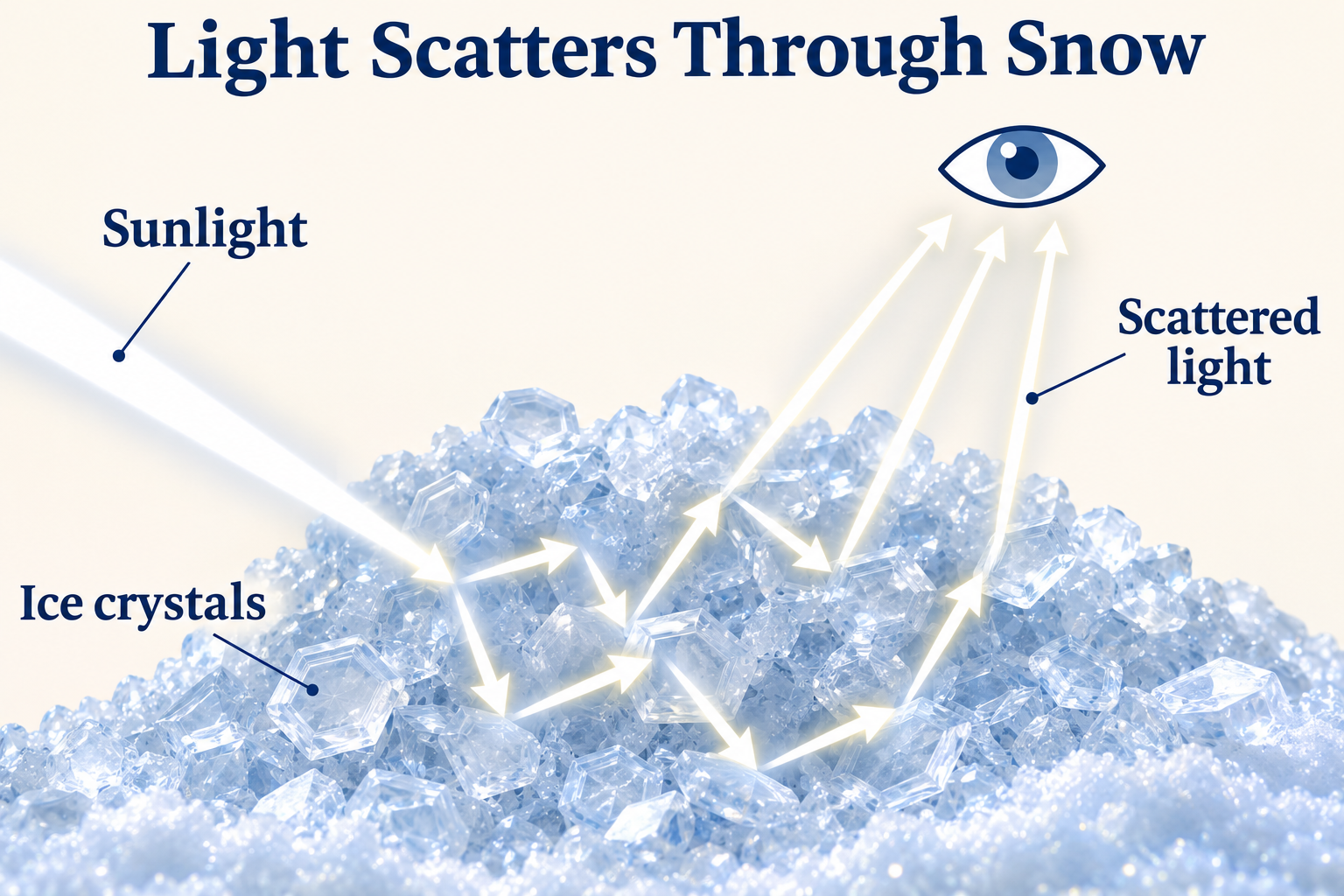
The colors in visible light are scattered fairly evenly. Many colors return together, so our eyes see white. A clear block of ice has fewer small surfaces inside it than a pile of snow. More light can pass through the block without taking so many turns.
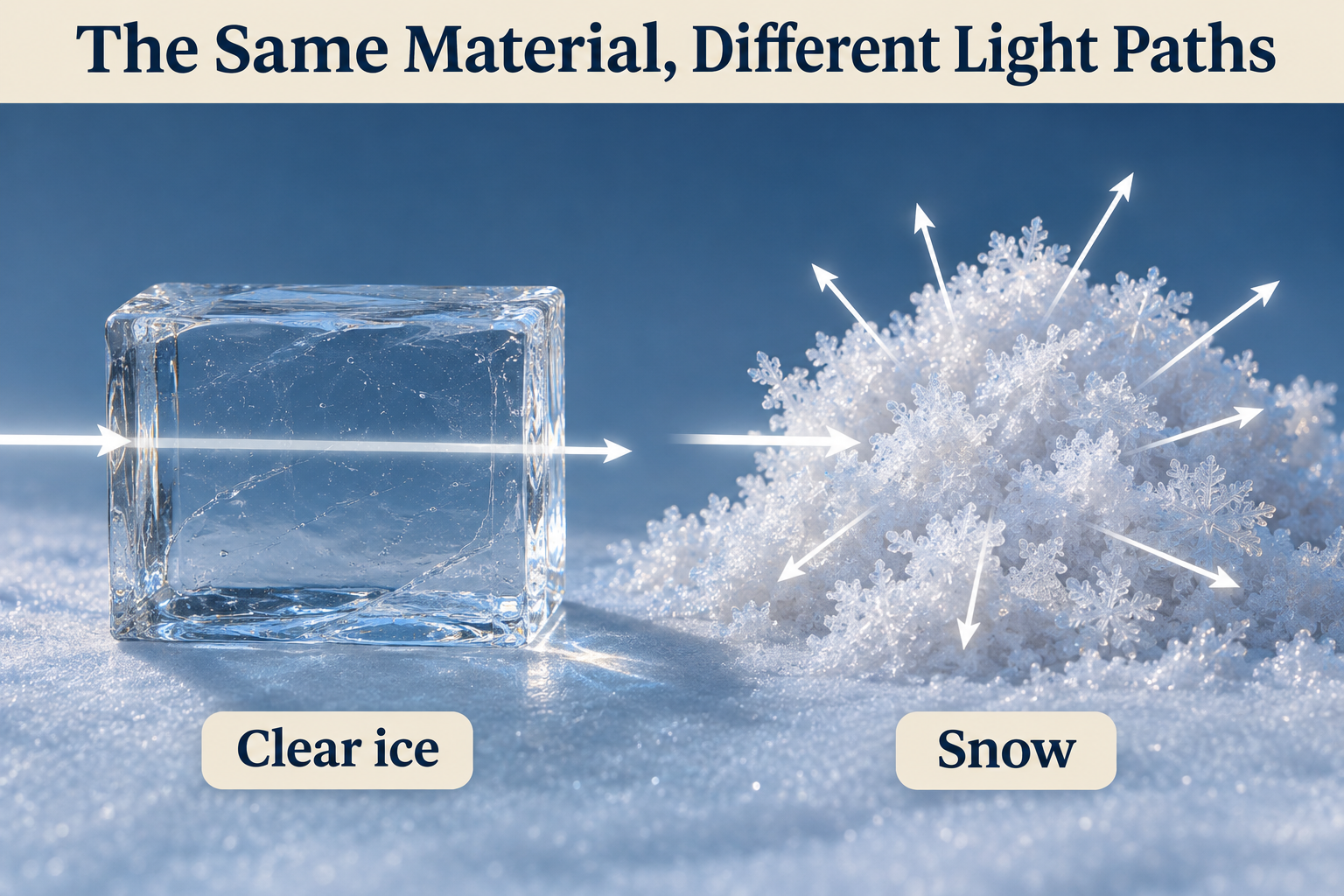
Snow does not always look exactly the same. Dust can make it darker, and the light around it can change its appearance. In the shade, snow may look a little blue. Deep, thick ice can also look blue because light takes a longer path through it.
The next time you see snow, remember that its color is also a story about light. The crystals are tiny, but together they send a bright mixture of colors back to your eyes.
Key Vocabulary
| Word | Meaning |
|---|---|
| crystal | a solid with an ordered structure |
| surface | the outside layer of something |
| scattering | light spreading in different directions |
| visible | able to be seen |
| shade | a place away from direct sunlight |
Reading Questions
- What is snow made of?
- What colors does sunlight contain?
- What does scattering do to the direction of light?
- Why do our eyes usually see snow as white?
- Give one reason snow might look darker.
- True or false: Snow and a clear block of ice always send light along the same path.
Answers
- Tiny ice crystals. Many crystals together form the snow we see.
- Many colors. A rainbow separates these colors for us to see.
- It changes the direction. Light is sent along many different paths.
- Many colors return together. Their mixture looks white to our eyes.
- Dust. Dirt on the snow can make its surface darker.
- False. Snow has many small surfaces that scatter light repeatedly.
Short Summary
Many snow crystals scatter the colors in sunlight. The colors return together, so the snow usually looks white.
More Easy Readings
Sources
- NSIDC: The science of snow
- NSIDC: Quick facts about snow
- National Weather Service: Winter weather information
The illustrations were created to explain the science in this reading.
'Nature and Weather' 카테고리의 다른 글
| Why Does Frost Form? | Easy English Reading (0) | 2026.10.30 |
|---|---|
| Why Can You See Your Breath in Cold Weather? | Easy Reading with Questions (0) | 2026.10.22 |
| Why Do Flowers Smell Good? | A2 ESL Science Reading Passage (0) | 2026.10.03 |
| Why Do Tornadoes Form? | A2 ESL Science Reading Passage (0) | 2026.07.08 |
| How Do Rivers Shape the Land? | A2 ESL Science Reading Passage (0) | 2026.06.11 |